




Hey there! As a supplier of cryostat technology, I'm super excited to share with you the principles behind this amazing technology. Let's dive right in!
So, what the heck is a cryostat anyway? Well, a cryostat is a device that's used to maintain a very low and stable temperature. It's like a high - tech fridge, but way more precise and powerful. These things are used in a whole bunch of different fields, from medical research to materials science.
The Basics of Temperature Control
At the heart of cryostat technology is the need to control temperature. You see, many scientific experiments and medical procedures require extremely low temperatures. For example, in medical research, when we're dealing with tissue samples, we need to keep them at a very low temperature to preserve their structure and prevent any degradation.
The first thing that makes a cryostat work is the cooling system. Most cryostats use some kind of refrigerant, which is a substance that can absorb heat and transfer it away from the sample area. One of the most commonly used refrigerants is liquid nitrogen. Liquid nitrogen has a boiling point of around - 196°C (- 321°F). When it boils, it absorbs a huge amount of heat from its surroundings, which helps to cool down the cryostat chamber.
There are also mechanical refrigeration systems. These work a bit like the refrigerators in our homes, but they're designed to reach much lower temperatures. They use a compressor, condenser, and evaporator to circulate a refrigerant gas. The gas is compressed, which increases its temperature. Then it's passed through a condenser, where it releases heat and turns into a liquid. The liquid then passes through an expansion valve, which causes it to expand and cool down. This cold refrigerant is then used to cool the cryostat chamber.
Insulation: Keeping the Cold In
Another crucial aspect of cryostat technology is insulation. We don't want the cold air inside the cryostat to escape, and we also don't want the warm air from the outside to get in. That's where insulation comes in.
Most cryostats are made with layers of insulating materials. One common type of insulation is vacuum insulation. A vacuum is an excellent insulator because there are no air molecules to transfer heat. Cryostats often have a double - walled design, with a vacuum between the walls. This helps to reduce heat transfer by conduction and convection.
There are also other insulating materials like foam or fiberglass. These materials work by trapping air in small pockets. Air is a poor conductor of heat, so these materials help to slow down the transfer of heat between the inside and outside of the cryostat.
Precise Temperature Regulation
It's not enough to just cool down the cryostat; we also need to regulate the temperature very precisely. That's where temperature sensors and control systems come in.
Temperature sensors, like thermocouples or resistance temperature detectors (RTDs), are placed inside the cryostat chamber. These sensors measure the temperature and send a signal to the control system. The control system then compares the measured temperature to the desired temperature. If the temperature is too high, the control system will increase the cooling power. If it's too low, it will reduce the cooling power.
This feedback loop ensures that the temperature inside the cryostat stays within a very narrow range. For example, in a medical cryostat used for tissue sectioning, the temperature might need to be maintained at - 20°C (- 4°F) with an accuracy of ± 0.5°C.
Applications of Cryostat Technology
Now that we know how cryostats work, let's talk about some of the applications.
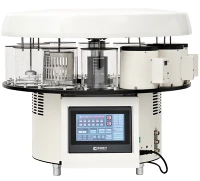
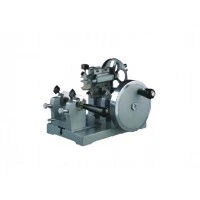
In the medical field, cryostats are used for a procedure called cryosectioning. This is when a thin slice of tissue is cut using a Cryostat Microtome With Touch Screen. The tissue is first frozen in the cryostat to make it firm enough to cut. Then, the microtome cuts very thin slices, which can be examined under a microscope. This is a crucial technique for diagnosing diseases like cancer.
In materials science, cryostats are used to study the properties of materials at low temperatures. Some materials, like superconductors, only exhibit their unique properties at very low temperatures. By using a cryostat, scientists can control the temperature and study these materials in detail.
There are also Cryotome and Cryostats Semi - Automatic models that offer different levels of automation and functionality. These are great for different types of research and applications.
Why Our Cryostats Stand Out
As a cryostat supplier, we take pride in the quality of our products. Our cryostats are designed with the latest technology to ensure precise temperature control and reliability. We use high - quality insulation materials to minimize heat loss and reduce energy consumption.
Our temperature control systems are state - of - the - art, allowing for very accurate and stable temperature regulation. We also offer a range of models to suit different needs, whether you're a small research lab or a large medical facility.
Get in Touch for Your Cryostat Needs
If you're in the market for a cryostat, whether it's for medical research, materials science, or any other application, we'd love to hear from you. Our team of experts can help you choose the right cryostat for your specific requirements. We offer competitive prices, excellent customer service, and reliable after - sales support.
So, don't hesitate to reach out and start a conversation about your cryostat needs. We're here to help you take your research and procedures to the next level.


References
- "Cryogenic Engineering" by Richard W. Swift
- "Medical Laboratory Technology" textbooks