


Hey there! As a supplier of Glass Coverslippers, I often get asked about the thermal stability of these little but crucial lab tools. So, let's dive right into it and explore what thermal stability means for Glass Coverslippers.
First off, what exactly is thermal stability? In simple terms, thermal stability refers to how well a material can withstand changes in temperature without undergoing significant physical or chemical changes. For Glass Coverslippers, this is super important because they're used in a variety of lab settings where temperature can vary widely.
In a laboratory environment, Glass Coverslippers are often used in microscopy. When you're looking at a sample under a microscope, sometimes you need to heat the sample to observe certain reactions or to make the cells or organisms more visible. If the Glass Coverslipper can't handle the heat, it might crack, warp, or even break, which can mess up your experiment big time.
The thermal stability of Glass Coverslippers depends on a few factors. One of the main factors is the type of glass used. There are different kinds of glass out there, and each has its own unique properties. For example, borosilicate glass is known for its excellent thermal stability. It has a low coefficient of thermal expansion, which means it doesn't expand or contract much when the temperature changes. This makes it a great choice for Glass Coverslippers that will be exposed to high temperatures.
Another factor that affects thermal stability is the thickness of the Glass Coverslipper. Thicker coverslippers tend to be more thermally stable because they can absorb and distribute heat more evenly. However, thicker coverslippers can also make it harder to get a clear view under the microscope, so it's a bit of a balancing act.
Let's talk about some real - world applications. In histology, where you're studying the microscopic structure of tissues, Glass Coverslippers are used to protect the tissue samples and to provide a flat surface for viewing. Sometimes, the samples need to be heated during the staining process. A thermally stable Glass Coverslipper ensures that the sample remains intact and the coverslipper doesn't break or distort, allowing for accurate analysis.
In cell culture experiments, temperature control is also crucial. Cells are very sensitive to changes in temperature, and the Glass Coverslipper needs to be able to maintain its integrity in the temperature range required for cell growth. If the coverslipper can't handle the temperature, it can release contaminants or cause physical damage to the cells.
Now, let's take a look at how we test the thermal stability of our Glass Coverslippers. We use a variety of methods to ensure that our products meet the highest standards. One common method is to subject the coverslippers to a series of temperature cycles. We heat them up to a certain temperature, hold them there for a period of time, and then cool them down. We repeat this process multiple times and check for any signs of damage, such as cracks or changes in shape.


We also use advanced imaging techniques to examine the coverslippers at a microscopic level. This allows us to detect any subtle changes in the glass structure that might affect its thermal stability. By using these rigorous testing methods, we can guarantee that our Glass Coverslippers are reliable and can withstand the demands of even the most challenging lab environments.
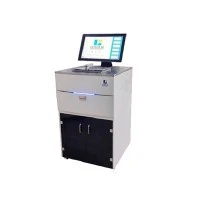
If you're in the market for high - quality Glass Coverslippers, you might be interested in our Automated Glass Coverslipper. This innovative product offers precise and efficient covering of samples, and it's made with thermally stable glass to ensure optimal performance. And of course, our standard Glass Coverslipper is also a great choice for a wide range of applications.
So, why should you choose our Glass Coverslippers? Well, aside from their excellent thermal stability, we offer a wide range of sizes and thicknesses to meet your specific needs. We also have a strict quality control process in place to ensure that every coverslipper we produce is of the highest quality. Our coverslippers are made from pure, high - grade glass, which means they're free from contaminants that could interfere with your experiments.
If you're looking for a reliable supplier of Glass Coverslippers, look no further. Whether you're a researcher in a large university lab or a technician in a small diagnostic center, we have the products you need. Our team of experts is always available to answer your questions and help you choose the right coverslippers for your application.
If you're interested in purchasing our Glass Coverslippers or want to learn more about our products, don't hesitate to reach out. We're here to make your lab work easier and more successful. Contact us today to start a conversation about your requirements and to get a quote. We're confident that once you try our Glass Coverslippers, you'll see the difference in quality and performance.
References:
- "Handbook of Glass Properties"
- "Microscopy Techniques and Applications"