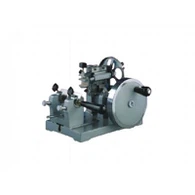


Xiaogan Kuohai Medical Technology Co., Ltd. is one of the most reliable manufacturers and suppliers of cryotome in China, featured by quality products and good price. If you're going to wholesale advanced cryotome made in China, welcome to get quotation from our factory. Also, customized service and 1 year warranty are available.
(1)LCD display, button operation; Microcomputer control, easy to operate and learn. LCD screen displays the total number of sections, section thickness, specimen shrinkage value, temperature, date, time, timing switch, etc.
(2) With hand wheel locking function, CNC machine tool processing according to ergonomic design
(3) Configure the specimen retraction function to prevent sample scratching and ensure the integrity of the section
(4) Key components: double compressors imported from Germany which are used to refrigerate freezer, cold table, tool holder and sample head respectively. Imported R404A environment-
friendly non-fluorine refrigerant.
(5) Timing defrosting and manual defrosting
(6) Quick repair function button, freely switch repair and slice mode in operation
(7) Semiconductor refrigeration function and heat removable glass door
(8) Slicer unit located outside the freezer to avoid the impact of thermal expansion and contraction on the unit, minimizing maintenance and maintenance
(9) Humanized hibernation function: after selecting the hibernation state, the temperature of the freezer is automatically controlled within the set range, and after canceling hibernation, the slice temperature can be quickly reached
(10) Lock keyboard function can prevent wrong operation
Technical Data
| Type | Tissue Cryostat Mircotome |
| Model number | KH-LQ3700 |
| Brand name | Kuohai |
| Place of origin | China |
| Instrument classification | Class I |
| Warranty | 1 year |
| After-sale service | Online technical support |
| Sterilization Method | UV ultraviolet sterilization |
| Freezer temperature control range | 0℃ ~ -50℃ |
| Freezing station temperature control range | 0℃ ~ -60℃ |
| Sample chuck temperature control range | 0℃ ~ -50℃ |
| Additional semiconductor refrigeration temperature of the freezing platform | -60°C |
| Frost-free freezing platform sample freezing points | ≥ 24 |
| Additional semiconductor refrigeration points on the freezing table | ≥ 6 |
| Semiconductor rapid refrigeration working time | 15 minutes |
| Maximum slice specimen size | 55mm×80mm |
| Specimen vertical movement stroke | ≥62mm |
| Horizontal movement stroke of specimen | ≥20mm |
| Electric coarse feed speed 2 levels | 0.9mm/s, 0.45mm/s |
| Slice thickness | 0.5μm - 100μm adjustable |
| Trim thickness | 0μm - 600μm adjustable |
| Specimen retraction value | 0-60μm adjustable |
| Overall machine size | 680×720×1150mm |
Product packing and shipping details
(1) Before the product leaves the factory, our company will strictly inspect and debug all components of the machine and equipment, and test whether the equipment can be used and installed normally.
(2) In order to prevent the product from being squeezed and damaged during long-distance transportation, we will use thick foam to fix the four corners of the product, and use standard export wooden boxes for external packaging.
(3) If you need OEM and ODM services and have separate product packaging solutions and logo printing standards, please communicate your plans and standards with us in advance. We can package the product according to your requirements.
(4) Transportation methods: a combination of sea, land, railway, air, and express delivery.
FAQ

What is tissue cryostat microtome used for?
A tissue cryostat microtome is used for the rapid and precise sectioning of frozen tissues. This specialized instrument is designed to operate at freezing temperatures and is commonly employed in histology and pathology laboratories for various purposes. Here are the primary uses of a tissue cryostat microtome:
Frozen Sectioning: One of the main applications of a tissue cryostat microtome is the preparation of frozen tissue sections for immediate pathological evaluation. This technique, known as frozen sectioning, allows for the quick assessment of tissue during surgical procedures, providing surgeons with real-time information for decision-making.
Research and Diagnostic Studies: Cryostat microtomes are utilized in research studies and diagnostic procedures where the preservation of tissue morphology at the cellular level is critical. The ability to cut thin sections of frozen tissue allows for detailed microscopic examination and analysis of tissue structures.
Special Staining Techniques: The sections obtained from a cryostat microtome can be subjected to various special staining techniques to highlight specific cellular components, structures, or molecular markers. This is particularly useful in research and diagnostic studies that require detailed characterization of tissues.
Immunohistochemistry (IHC): Cryostat sections are commonly used in immunohistochemical studies, where antibodies are applied to detect specific proteins within tissues. The preserved antigenicity of frozen sections makes them suitable for immunohistochemistry assays.
Molecular Studies: Tissue sections obtained using a cryostat microtome are often employed in molecular studies, including techniques such as in situ hybridization and RNA studies. The preservation of tissue integrity and cellular details is beneficial for molecular analyses.
Teaching and Training: Cryostat microtomes are used in educational settings for teaching histology and pathology. They provide a means to demonstrate tissue sectioning techniques and facilitate hands-on learning experiences for students.
In summary, a tissue cryostat microtome is a valuable tool for the preparation of high-quality frozen tissue sections, enabling a wide range of applications in both research and clinical settings. Its ability to operate at freezing temperatures makes it particularly useful for applications where preserving tissue morphology and cellular details are critical.
Hot Tags: cryotome, China cryotome manufacturers, suppliers, factory, Cryotome, Cryostat, Cryostat Microtome