



Liquid Based Cytology
Xiaogan Kuohai Medical Technology Co.,Ltd
Xiaogan Kuohai Medical Technology Co.,Ltd. is a rare domestic pathology instrument manufacturing company with a widespread user base throughout China. It is also one of the few companies in the domestic and international industry capable of researching, developing, and producing a complete set of pathology instruments and consumables. In 2014, the company established a modern production and processing base.
Why Choose Us
Rich Experience
Xiaogan Kuohai Medical Technology Co., Ltd. is a rare domestic pathology instrument manufacturing company with a widespread user base throughout China.
High Quality
The product range covers industries such as medical instruments, biotechnology, electronic technology, high-end building materials, and decoration engineering.
Technical Support
Our team of experts is available to assist with troubleshooting, answer technical inquiries, and provide guidance.
Customer Service
We prioritize open communication to address our clients' specific requirements and deliver personalized solutions.
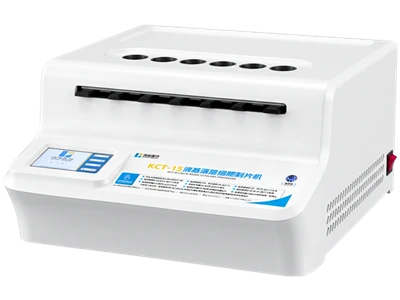
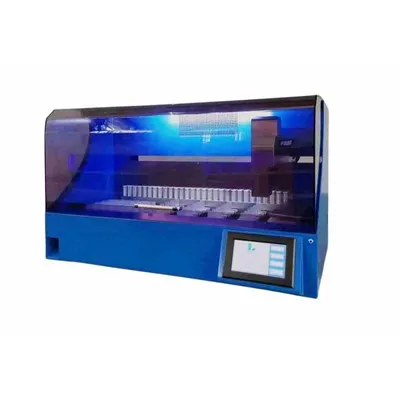
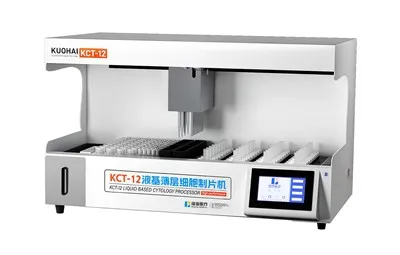
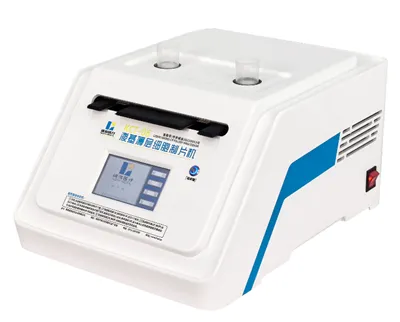

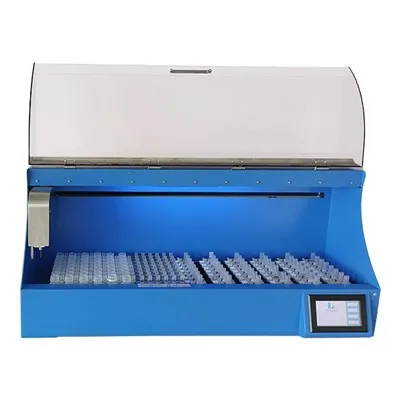
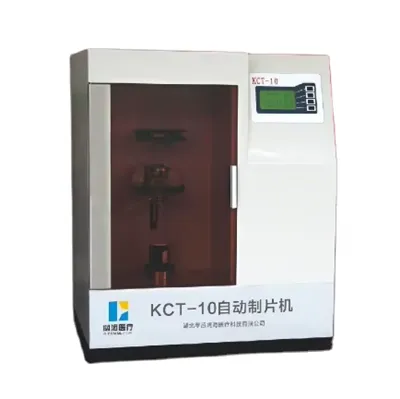
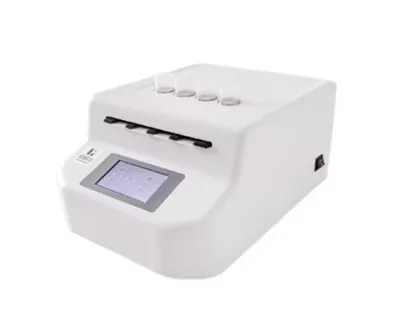
There are two main kinds, or branches, of cytology: exfoliative cytology and intervention cytology.
Healthcare providers can use cytology tests for almost all areas of your body. Some common types of cytology tests include:
- Gynecologic cytology.
- Urinary cytology.
- Breast cytology.
- Thyroid cytology.
- Lymph node cytology.
- Respiratory cytology.
- Eye cytology.
- Ear cytology.
Advantages of Liquid-Based Cytology Over Traditional Pap Smear in Cervical Cancer Screening
Liquid-Based Cytology (LBC) has emerged as a modern approach to cervical cancer screening, offering several advantages over the traditional Pap smear method. While high-quality evidence supporting its superiority in sensitivity and specificity remains elusive, the technological advancements in LBC preparation significantly enhance sample quality and diagnostic efficiency. Here are the key advantages of LBC Compared to the conventional Pap smear
Improved Sample Quality: During the LBC preparation process, excess blood and mucus are meticulously removed from the sample. This meticulous extraction process minimizes interference and enhances the visibility of epithelial cells, thereby improving the quality of the specimen.
Reduction of Cell Overlap: LBC employs sophisticated computer programs to organize cells into a single layer of tiled cell sheets. By minimizing cell overlap, this technique facilitates clearer visualization and more accurate interpretation of cellular morphology, thus enhancing diagnostic accuracy.
Enhanced Clarity and Identification: The wet-fixation of specimens in LBC ensures clear cellular structures and easy identification of abnormal cells. This feature contributes to more precise cytological interpretation and reduces the likelihood of misdiagnosis.
Reduced Visual Fatigue: With LBC, the number of cells observed in each smear is significantly reduced compared to traditional Pap smears. This reduction not only streamlines the analysis process but also alleviates visual fatigue among cytology workers, leading to improved concentration and accuracy in interpretation.
Utilization for HPV Testing: LBC offers the added advantage of preserving residual specimens for Human Papillomavirus (HPV) testing. By utilizing the same sample for multiple tests, healthcare providers can enhance the efficiency of cervical cancer screening programs and optimize resources for comprehensive patient care.
In conclusion, while high-quality evidence supporting the superiority of Liquid-Based Cytology over traditional Pap smears in cervical cancer screening is currently lacking, the advancements in LBC preparation technology offer tangible benefits in sample quality, diagnostic accuracy, and workflow efficiency. By leveraging these advantages, healthcare providers can optimize cervical cancer screening programs and improve patient outcomes in the fight against cervical cancer.
How Does a Cytology Test Work?
Each cytology test is slightly different depending on what kind of cells are being tested and if the sample is tissue or fluid. In general, there are four steps to a cytology test including:
Collecting the sample cells.
Processing the sample cells.
Examining the sample cells.
Sharing the results.
Your healthcare provider collects the sample of cells from your body that they need a pathologist to examine. Some of the ways a provider can collect cytology test samples include:
Brushing or scraping tissue from the surface of a part of your body.
Collecting fluid or discharge samples from your body, such as a pee sample.
Using fine-needle aspiration to draw a fluid sample from an area in your body.
Processing the sample cells
For some types of cytology tests that involve tissue samples, the healthcare provider who took the sample smears or spreads it on glass microscope slides. These slides are known as smears. They then send the smears to a pathology laboratory.
If the cytology test involves bodily fluid, the healthcare provider most likely won't be able to use smears since the sample is too diluted (there are only a few cells in the fluid). They'll most likely send the sample to a pathology lab in a small container.
Once a cytology sample arrives at the laboratory, a pathologist or lab technician dips the smears in certain stains (colored dyes) depending on what kind of sample it is. The stains help make the cells easier to see and examine under a microscope.
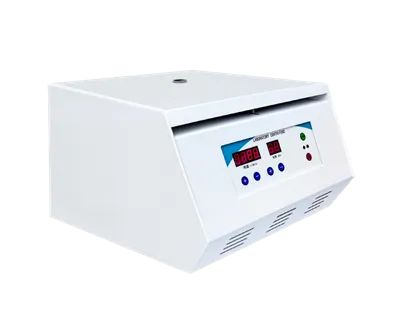
If the cytology sample is a fluid, a pathologist or lab technician may use a machine called a centrifuge to separate the cells they want to examine from the fluid. A centrifuge separates certain cells from fluid by spinning the sample very quickly. The pathologist then puts the cells on smears and may stain them.
After a pathologist or lab technician processes and stains the cytology samples, they examine the cells under a microscope, looking for abnormal cells. If they find abnormal cells, they mark them on the slides with a special pen. A pathologist then makes a diagnosis based on the cells and puts together a report.
After they put together a report, the pathologist will send it to your healthcare provider. Your provider will go over the results with you and determine the next steps.
Sample Collection for Cervical Cancer Screening programs
Cervical cancer, although nearly 100% preventable, remains one of the most common cancers and causes of cancer-related deaths in women across the globe – especially in low-and middle-income countries.
Over the years, the world has experienced a transition from conventional or liquid based cytology based screening programs to a molecular based screening program also known as primary HPV screening. This new screening method improves existing or newly implemented screening programs with a more sensitive way of testing and therefore identifies women earlier who may have an increased risk of developing cervical cancer.
However, the majority of cervical cancer cases are found in women who are unscreened or underscreened. There are many reasons women cannot or do not participate in a cervical cancer screening program – and Roche is addressing some of these barriers by expanding its portfolio offering to include a claim for self-sampling.
HPV Self Sampling provides women around the world an opportunity to participate in screening programs by collecting their own specimens, following detailed collection instructions provided by a healthcare worker. Depending on local regulations, this may require for example a visit to a local clinic or a healthcare worker visiting remote areas where they explains the self-sampling procedure.
Despite their geographic location or their access to screening programs, some women are more likely to participate in HPV screening when given the option to collect their sample in a private setting.
The Roche Cervical Cancer Portfolio performs with multiple media types, including Roche Cell Collection Medium. Roche Cell Collection Medium is a liquid-based cytology collection solution that provides long-term stability for cervical specimens including vaginal specimens that are collected via self-collection. It is designed for the preservation and transport of cells to be used in molecular testing and/or the preparation of cytology slides, supporting the entire cervical cancer screening workflow.
Roche Cell Collection Medium is designed for the preservation and transport of cells to be used in molecular testing and/or for the preparation of cytology slides.
Roche Cell Collection Medium with Brush
Systems Compatibility
Roche Cell Collection Medium can be used with the following Roche systems & Assays according to the Roche product Instructions for Use and the Roche
Our Factory
In 2015, Kuohai was recognized as a "National High-Tech Enterprise." "Kuohai Medical Technology" owns five subsidiaries, including Hubei Xiaogan Kuohai Medical Technology Co., Ltd., Xiaogan Kuohai Medical Technology Co., Ltd., Hubei Haishi Industrial Co., Ltd., Xiaogan Ruifeng Electronic Technology Co., Ltd., and Xiaogan Dinghang Decoration Engineering Co., Ltd. The product range covers industries such as medical instruments, biotechnology, electronic technology, high-end building materials, and decoration engineering. The company is steadily moving towards industrial group development.


FAQ
Xiaogan Kuohai Medical Technology Co., Ltd. is one of the leading liquid based cytology manufacturers and suppliers in China. We warmly welcome you to buy cost-efficient liquid based cytology for sale here from our factory. All customized products are with high quality and competitive price. Contact us for OEM service.
Liquid Based Cytology, Thin Prep Processor, Liquid Based Cytology Processor