




Grossing Station
Custom Grossing Station Supplier!
Xiaogan Kuohai Medical Technology Co., Ltd. is one of the few pathology instrument manufacturers in China. After years of development, Kuohai Medical Technology's medical equipment users have exceeded 1,500.
Rich Product Series
We are constantly committed to expanding our product line. It encompasses paraffin slicer series, cryo-slicer series, fully automatic tissue processor series, and fully automatic closed vacuum tissue processor series, among others.
High Quality
We continuously strive to optimize the R&D process and production links. Every product undergoes meticulous design and rigorous testing procedures to ensure that it meets the expectations of our customers.
Wide Range of Application
The products we offer have extensive applications in various industries such as medical devices, biotechnology, electronic technology, high-end building materials, and decoration engineering.
Complete Qualifications
The company has successfully passed the ISO9001, ISO13485, and CE certifications, and holds numerous national patent certificates. This clearly demonstrates its position as a reliable and innovative player in the industry.


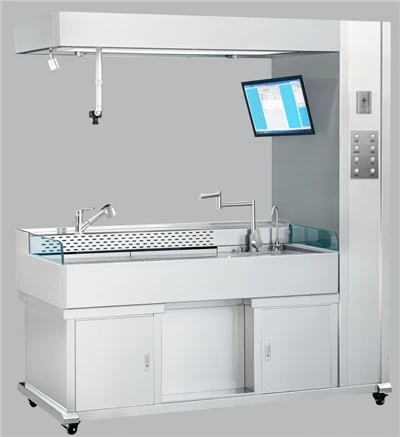


What is Grossing Station
The term 'grossing' in pathology refers to inspecting specimens to retrieve diagnostic information and measuring and cutting tissue samples to prepare them for further testing. Therefore, grossing stations are the workstations in laboratories where specimens are examined.
Tissue Examination
Grossing stations provide a dedicated space equipped with proper lighting, magnification, and tools for examining tissue specimens. Pathologists and pathology assistants can examine tissues to identify gross features such as size, shape, colour, texture, and any visible lesions or abnormalities.
Tissue Dissection
Grossing stations provide a clean and organized environment for dissecting tissue specimens into smaller sections for further processing and microscopic examination. Proper tools, including scalpels, forceps, and scissors, are available for precise dissection.
Specimen Handling
Grossing stations are designed to ensure proper handling and labelling of tissue specimens to maintain sample integrity and prevent mix-ups or contamination. Specimens are carefully labelled with patient information and tracked throughout the pathology workflow.
Documentation
Pathologists and pathology assistants document relevant information about each tissue specimen, including its gross features, dimensions, and any notable findings. This documentation serves as a record for subsequent analysis, interpretation, and reporting.
Safety and Containment
Grossing stations are equipped with features to ensure the safety and containment of potentially hazardous materials, such as biohazardous tissues or fluids. They may include ventilation systems, splash guards, and waste disposal mechanisms to minimize exposure risks.
Enhancing Efficiency
Grossing stations are designed to streamline the specimen handling and dissection process. This efficiency not only reduces the time required for specimen examination but also ensures the accuracy and integrity of the tissue samples. This is crucial for accurate diagnosis, as any errors during the grossing process can have significant implications for patient treatment.

Types of Grossing Station
Down-Draft Grossing Stations
Airflow is directed downward, carrying fumes away from the user and preventing their inhalation. Suitable for laboratories with stringent safety requirements.
Back-Draft Grossing Stations
Airflow is directed behind the user, carrying fumes away from the dissection area.
Ideal for laboratories where space constraints make down-draft stations impractical.
Combo (Combination) Grossing Stations
Offer the flexibility of both down-draft and back-draft configurations. Suitable for laboratories with diverse specimen types and processing requirements.
Portable Grossing Stations
Designed for flexibility, allowing users to move the station as needed. Ideal for laboratories with variable workspaces or for fieldwork.
Advanced Grossing Workstations
Incorporate advanced features such as digital imaging, touchscreen interfaces, and integrated cameras. Provide enhanced documentation capabilities and may be suitable for labs with specific research or documentation needs.
Maintenance Tips for Grossing Station
Regular Cleaning and Disinfection
Clean the grossing station regularly to prevent the accumulation of tissue debris, fluids, and contaminants. Use appropriate cleaning agents and disinfectants recommended by the manufacturer to maintain a sterile and hygienic working environment. Pay particular attention to areas that come into direct contact with specimens or body fluids.
Check Ventilation System
The ventilation system plays a vital role in removing hazardous fumes and maintaining a safe working environment. Regularly inspect and clean ventilation filters, fans, and ducts to ensure proper airflow. Consult the manufacturer's guidelines for specific maintenance instructions on the ventilation system.
Calibration and Inspection
Periodically check and calibrate components of the grossing station, such as the digital scales or electronic controls, to ensure accurate measurements and optimal performance. Inspect all parts, including cutting surfaces and movable components, for any signs of wear, damage, or malfunction. Follow the manufacturer's instructions for calibration and inspections.
Sharps Disposal
Properly dispose of sharps used in the grossing station. Use designated sharps containers and ensure they are securely closed and regularly emptied following biohazard waste management guidelines. Safely handle and dispose of sharps to prevent injuries and potential contamination.
Training and Maintenance Record Keeping
Train laboratory staff on proper usage and maintenance protocols for the pathology grossing station. Keep track of maintenance activities, inspections, and repairs in a maintenance log or record. This helps identify patterns, track equipment performance, and ensure that scheduled maintenance tasks are consistently implemented.
Safety First
One of the primary functions of grossing stations is to ensure the safety of laboratory personnel. During the grossing process, pathologists and technicians are exposed to potentially hazardous substances, including formalin, which is used for tissue fixation. Grossing stations are equipped with ventilation systems that help remove harmful fumes and airborne particles, thus minimizing the risk of exposure to toxic substances.
Quality Control
Grossing stations provide a controlled environment for specimen handling, helping maintain the tissue samples' quality and integrity. They come with adjustable lighting and magnification tools, ensuring that pathologists can closely examine the specimens for subtle abnormalities and variations. This attention to detail is critical for accurate diagnosis and subsequent treatment planning.
Enhancing Patient Care
The use of grossing stations in the healthcare sector has a direct and profound impact on patient care.
Accurate Diagnosis
By ensuring that tissue samples are handled with precision and care, grossing stations contribute to accurate and reliable diagnoses. This, in turn, leads to more effective treatment plans and better patient outcomes.
Quality Assurance
The controlled environment and documentation capabilities of grossing stations support quality assurance efforts in laboratories. This helps maintain the high standards required in healthcare and ensures that patients receive the best possible care.
Research and Education
Grossing stations also play a vital role in medical education and research. They provide a controlled environment for pathologists and students to study tissue specimens, aiding in the advancement of medical knowledge and the training of future healthcare professionals.
Components of Grossing Station
Work Area
This includes the activity space on the station, such as stainless steel shelves or an embedded sink. Features should be positioned to promote optimal workflow and minimal exertion. For example, a swing spout for the sink or magnetic toolbars can make tools easier to access.
Down Draft System
This system provides consistent downward airflow across the work surface. Grid plates may elevate the work area over a deep sink that can accept fluids and ventilate the area.
Digital Imaging System
This system can include a high-resolution camera, microphone, and editing software to streamline and document the grossing procedure. It can also enable users to save full digital documentation, including images, videos, audio, and annotations.
Working Principle of Grossing Station
Examination: The grossing technician examines the specimen to identify its anatomical features, assess its size, shape, and any visible abnormalities. They also document any relevant clinical information provided by the surgeon or clinician.
Dissection: The technician carefully dissects the specimen, often using scalpels and other surgical instruments, to expose relevant structures and ensure that all areas of interest are adequately sampled for further processing and analysis.
Orientation: Proper orientation of the specimen is crucial for accurate histopathological diagnosis. The technician ensures that tissue samples are oriented correctly before they are processed and embedded in paraffin wax.
Sampling: The technician selects representative tissue samples from various regions of the specimen, ensuring that all relevant pathological features are included for microscopic examination. This may involve sampling specific lesions, margins, or areas of interest as indicated by the clinical context.
Processing: After grossing, the tissue samples are processed through a series of steps including fixation, dehydration, embedding, sectioning, staining, and mounting, as described in the histopathology workflow. This is explained in the blog topic - tissue processing.
How to Clean Grossing Station
Never, Ever Use Wire Brushes, Brillo, Steel Wool Or Abrasive Cleansers
If something needs to be aggressively cleaned only use a Scotch-brite pad or similar product and only scour with the "grain" of the stainless. As an example, please reference the photo on page 2 of this document. It is clear that a very abrasive product was used in an area on the unit and that did not follow the grain of the stainless. The effects of this scratching may diminish over time with proper care but the effects of this scouring are obvious. Do not use cleaners containing chlorine. While it may be second nature to bleach everything, stainless steel and chlorine do not mix well. Do not use bleach when cleaning stainless steel. Do not allow bleach or bleach water to sit for long periods. Bleach can eventually cause staining and pitting. Bleach stains are removed with stainless steel cleaning polish.
Keep The Surface Clean Of Grime, Tissue And Particulates.
This can be accomplished by using the "Water Hand Spray Rinse" and use of cleaning products.
Rinse The Surface After Using Disinfectant.
In Pathology and other medical areas the act of disinfecting is desired. There are a number of ways to do this. Labs use any number of different products including 10% bleach or other disinfectant sprays and wipes. For the most part, each and every one of these has high salt contents and lower PH levels to aid with disinfection. Most disinfectants must be followed up with a water rinse to remove the salts that remain after these products dry. We advise to always follow up a disinfection cleaning with a thorough rinse of water. We advise not to use diluted bleach, if you must; we stress the importance of a thorough rinse of water after use. If not rinsed properly, these salts can become visible after the disinfectant dries.
How to Choose Grossing Station
Material of Construction
Stainless Steel is the de-facto material of construction for pathology grossing workstations because of its sturdiness, durability, corrosion resistance and clean ability. Usually, SS 304 is used and if still better corrosion resistance is required one may opt for SS 316, which is more expensive than the former. The other thing to keep in mind is the thickness of the Stainless Steel which is usually expressed in Gauge. Generally, a 16 Gauge SS is considered to be an optimal thickness for Grossing Work Station.
Ventilation
One can choose from three options of ventilations: downdraft, backdraft or both. Ventilation helps keep the toxic formalin and xylene fumes away from the user.
Work Space and Footprint
Check to see how big a workspace is required for working and how much area can you assign for the unit. Select a model that can provide a maximum workspace with the lowest footprint. Specify if you will be needing a single or double user workspace. Adjustable height units are best suited as the working height can be increased or decreased depending on the user's height. The other thing to consider would be the room height so that workstation height is specified accordingly.
Basic Features
The must have features of the workstation are dissecting board with integrated ruler, a sprinkler system with a perforated work space for easy cleaning, rounded edge sink with hot/cold water faucets, suitably powered drainage system to prevent blockages, illumination of the entire workarea with an additional spot light with movable hose, magnetic Instruments holder, workspace rulers, storage compartments, formalin dispensing units, integrated shelving, covered and waterproof electrical sockets.
Utility Compatibility
A Grossing Workstation will need to be connected to the water supply, the electric supply, the drainage system and the ventilation system. Check to see the manufacturers specifications to make sure that the workstation's connecting points are compatible with the utility specifications of your lab.
Safety Precautions of Using Grossing Station


Body Substance Precautions (BSP)
Body substance precautions are observed throughout the laboratory to prevent contact with blood and other potentially infectious materials. All body fluids are considered potentially infectious. All procedures involving blood or other moist body substances shall be performed in such a manner as to minimize splashing, spraying, spattering, and generation of droplets of these substances.
Personal Protective Equipment (PPE)
Personal protective equipment (PPE) will appropriately be utilized in all laboratories as assigned based on the task assessment, which does not allow blood, other potentially infectious materials, or hazardous chemical exposure to pass through to or otherwise reach the employee's work clothes (e.g., scrubs), street clothes, undergarments, skin, eyes, mouth, or other mucous membranes under normal conditions of use and for the duration of time the protective equipment is used.
Hazardous Chemicals
A system of local and/or general exhaust is recommended to keep employee exposures below the established exposure limits. Local exhaust ventilation is generally preferred because it can control the emissions of the contaminant at its source, preventing dispersion of it into the general work area.
Radiation Safety
Radioactive sources can include liquids or solids that release radiation above normal background levels. Solids are most likely to be encountered in prostate specimens. See the Pathology policy (found on the pathology home page) on handling prostate seeds. Seeds must not be handled until cleared by Safety Management Services.
Ergonomics
Use fatigue mats when long periods of standing are required. Place items on the station to avoid excessive bending, reaching and stretching. Use a chair if needed to avoid excessive movement.
Certifications


Our Factory


Frequently Asked Questions
Q: What are grossing stations?
Q: What are the basics of grossing?
Q: What are the elements of the gross description?
Q: What is the grossing procedure in histology?
Q: What is the aim of grossing?
Q: What is a histology grossing technician?
Q: What is a grossing station used for?
Q: Why is the gross examination important?
Q: Why ergonomics matters to your grossing station?
Q: What precautions should be taken during tissue grossing?
Q: What is the purpose of inking during grossing?
Q: What is the significance of grossing?
Q: Why do we do grossing?
Q: What are the two methods used in performing a gross exam?
Q: What is a grossing room?
Xiaogan Kuohai Medical Technology Co., Ltd. is one of the leading grossing station manufacturers and suppliers in China. We warmly welcome you to buy cost-efficient grossing station for sale here from our factory. All customized products are with high quality and competitive price. Contact us for OEM service.
Autopsy Table, Grossing Table, Histology Grossing Station