


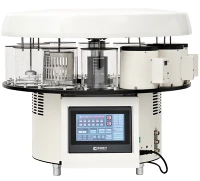


In the field of histology, a tissue embedder is an indispensable instrument that plays a crucial role in preparing tissue samples for microscopic examination. As a leading tissue embedder supplier, we understand the significance of providing high - quality equipment with appropriate dimensions. In this blog post, we will delve into the dimensions of a typical tissue embedder and why they matter.
Understanding Tissue Embedder Basics
Before we discuss the dimensions, it's essential to understand what a tissue embedder does. A tissue embedder is used to enclose tissue specimens in a supporting medium, usually paraffin wax. This process, known as tissue embedding, is a vital step in the histological workflow as it allows for the creation of thin, uniform tissue sections that can be stained and examined under a microscope. There are different types of tissue embedders available in the market, such as Tissue Embedding Center, Parrafin Embedder, and histology embedding station, each with its own unique features and dimensions.
Key Dimensions of a Typical Tissue Embedder
Overall Size
The overall size of a tissue embedder is an important consideration, especially for laboratories with limited space. A typical tissue embedder has a footprint that can range from relatively compact units suitable for small - scale operations to larger, more comprehensive models for high - throughput laboratories.
Compact tissue embedders may have a width of around 50 - 60 centimeters, a depth of 40 - 50 centimeters, and a height of 30 - 40 centimeters. These smaller units are ideal for clinics or research facilities where space is at a premium. They can be easily placed on a benchtop without taking up too much valuable workspace.
On the other hand, larger tissue embedders designed for busy hospitals or large - scale research institutions can have dimensions of up to 80 - 100 centimeters in width, 60 - 80 centimeters in depth, and 50 - 60 centimeters in height. These larger models often come with additional features such as multiple wax reservoirs and more advanced temperature control systems, which require more physical space to accommodate.
Wax Reservoir Dimensions
The wax reservoir is a critical component of a tissue embedder as it holds the molten paraffin wax used for embedding the tissue specimens. The size of the wax reservoir can vary depending on the intended use of the embedder.
For low - volume applications, a tissue embedder may have a wax reservoir with a capacity of around 1 - 2 liters. These smaller reservoirs are sufficient for processing a few tissue samples at a time. The dimensions of such a reservoir could be approximately 15 - 20 centimeters in diameter and 10 - 15 centimeters in height.
In contrast, high - throughput tissue embedders designed for processing a large number of specimens simultaneously may have wax reservoirs with capacities of 5 liters or more. The dimensions of these larger reservoirs can be around 30 - 40 centimeters in diameter and 20 - 30 centimeters in height.


Cooling Plate Dimensions
The cooling plate is where the tissue specimens are placed after being filled with molten wax to solidify the wax and form the tissue block. The size of the cooling plate can affect the number of tissue specimens that can be processed at once.
A typical tissue embedder for small - to - medium - sized laboratories may have a cooling plate with dimensions of approximately 20 - 30 centimeters in length and 15 - 20 centimeters in width. This size allows for the processing of around 5 - 10 tissue specimens simultaneously.
Larger, high - throughput tissue embedders may feature cooling plates that are 40 - 50 centimeters in length and 25 - 35 centimeters in width, enabling the processing of 20 or more specimens at a time.
Workspace Dimensions
The workspace within the tissue embedder, including the area for handling the tissue specimens, syringes, and other embedding tools, also varies in size. A comfortable workspace is essential for technicians to perform the embedding process efficiently and accurately.
Small tissue embedders may have a workspace area of around 300 - 400 square centimeters, which can accommodate the basic tools required for embedding a small number of specimens.
Larger multi - functional tissue embedders can offer a workspace area of 600 - 800 square centimeters or more, providing ample room for technicians to work with multiple tools and specimens simultaneously.
Why Dimensions Matter
The dimensions of a tissue embedder are not just about physical space; they also have a significant impact on the functionality and efficiency of the instrument.
Space Utilization
As mentioned earlier, laboratories often have limited space. Choosing a tissue embedder with appropriate dimensions ensures that the equipment fits well within the available workspace without causing overcrowding. This is particularly important in shared laboratory environments where multiple pieces of equipment need to be accommodated.
Throughput
The size of the wax reservoir, cooling plate, and workspace directly affects the throughput of the tissue embedder. Larger dimensions generally allow for the processing of more specimens at a time, which is crucial for high - volume laboratories. By choosing a tissue embedder with the right dimensions, laboratories can increase their productivity and meet the demands of a large number of samples.
Ergonomics
Proper ergonomics are essential for laboratory technicians who spend long hours operating the tissue embedder. A tissue embedder with well - designed dimensions provides a comfortable working environment, reducing the risk of fatigue and errors. For example, a larger workspace allows for easier movement of hands and tools, while a properly sized cooling plate ensures that specimens can be easily accessed and manipulated.
Conclusion
In conclusion, the dimensions of a typical tissue embedder are a critical factor to consider when selecting an instrument for your laboratory. Whether you are looking for a compact model for a small clinic or a large - scale, high - throughput system for a busy research institution, understanding the different dimensions and their implications is essential.
As a trusted tissue embedder supplier, we offer a wide range of tissue embedders with varying dimensions to meet the diverse needs of our customers. If you are interested in learning more about our products or discussing your specific requirements for a tissue embedder, we encourage you to contact us for procurement and in - depth consultations.
References
- Histology: A Text and Atlas with Correlated Cell and Molecular Biology by Michael H. Ross, Wojciech Pawlina
- Laboratory Techniques in Histotechnology by Samir M. H. Ali, Ritu Kumar