




Hey there! As a cryostat supplier, I've had the chance to work with a bunch of different cryostat models. And let me tell you, each one comes with its own set of unique features and differences. In this blog, I'm gonna break down these differences to help you understand which cryostat might be the best fit for your needs.
Temperature Control
One of the most crucial aspects of a cryostat is its temperature control. Different models offer varying levels of precision and range. Some basic cryostats are designed to maintain a relatively stable temperature within a narrow range, say between -10°C and -20°C. These are great for routine histological work where the sample doesn't require extremely low temperatures.
On the other hand, high - end models can achieve much lower temperatures, sometimes as low as -40°C or even -50°C. They also offer more precise temperature control, with fluctuations of less than ±0.5°C. This level of precision is essential for certain types of research, like studying the properties of biological samples at extremely cold temperatures. For instance, if you're working on cryopreservation of cells or tissues, a cryostat with precise and low - temperature control is a must.
Cutting Mechanism
The cutting mechanism is another area where cryostat models differ significantly. There are two main types: manual and automated.
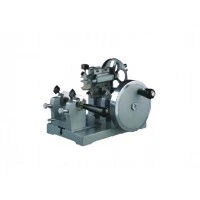
Manual cryostats are more traditional. They require the operator to physically turn a handwheel to advance the specimen and make cuts. This type of cryostat is often more affordable and can be a good choice for smaller labs or those on a tight budget. However, it does require a certain level of skill and dexterity from the operator. Making consistent, thin sections can be a bit challenging, especially for beginners.
Automated cryostats, on the other hand, take the guesswork out of cutting. They use a motorized system to advance the specimen at a pre - set speed. This results in more consistent and accurate cuts, even for very thin sections. Automated cryostats are also great for high - throughput labs where a large number of samples need to be processed quickly. For example, in a diagnostic lab that handles a high volume of biopsy samples, an automated cryostat can significantly improve efficiency. You can check out our Cryotome for an example of an advanced cutting - mechanism cryostat.
Sample Handling
Different cryostat models also vary in terms of how they handle samples. Some cryostats have a simple sample holder that can accommodate standard tissue blocks. These are suitable for most routine histological applications.
However, more advanced models offer features like adjustable sample holders. These can be tilted or rotated to allow for different cutting angles, which is useful for obtaining sections from irregularly shaped specimens. Some cryostats also come with a built - in specimen orientation system, which helps ensure that the sample is properly aligned before cutting. This can save a lot of time and reduce the chances of wasting samples.
Display and User Interface
The display and user interface of cryostats have come a long way in recent years. Basic models may have a simple analog display that shows the temperature and cutting speed. While these are functional, they can be a bit difficult to read and adjust.
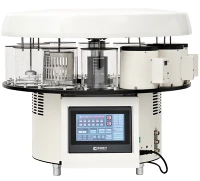
In contrast, modern cryostats often feature digital displays. These are much easier to read, and they can show a wider range of information, such as the remaining cutting distance, the number of sections cut, and the temperature history. Some cryostats even have touch - screen interfaces, which make it extremely easy to navigate through the settings and make adjustments. Our Cryostat Microtome With Touch Screen is a great example of a cryostat with an intuitive and user - friendly interface.
Noise Level
Noise can be a significant factor, especially in a busy lab environment. Some cryostat models are relatively quiet, which is ideal for labs where noise can be a distraction. These cryostats are often designed with advanced insulation and noise - reducing technology.
On the other hand, older or less expensive models may produce more noise during operation. This can be a problem if you're working in a small lab or if you need to concentrate on your work. When choosing a cryostat, it's worth considering the noise level, especially if you'll be using it for long periods.
Size and Portability
The size and portability of cryostats can also vary. Some cryostats are large and bulky, designed to be stationary in a dedicated lab space. These are usually high - end models with a lot of features and a large capacity.
On the other hand, there are smaller, more portable cryostats available. These are great for fieldwork or for labs with limited space. They can be easily moved from one location to another, allowing you to perform cryosectioning wherever you need it.
Cost
Cost is always a consideration when choosing a cryostat. Basic models can be relatively affordable, making them a good option for small labs or those with a limited budget. These models usually have the essential features but may lack some of the advanced capabilities of more expensive models.
High - end cryostats, on the other hand, can be quite costly. However, they often come with a wide range of features, such as precise temperature control, automated cutting, and advanced sample handling. If you're working on high - level research or need to process a large number of samples, investing in a more expensive cryostat may be worth it in the long run. You can explore our Cryostat Microtome range to see the different price - feature combinations we offer.
Maintenance and Service
Finally, different cryostat models also differ in terms of maintenance and service requirements. Some models are designed to be easy to clean and maintain. They may have removable parts that can be easily accessed and cleaned, reducing the risk of contamination.
Other models may require more specialized maintenance. For example, some cryostats with complex cooling systems may need to be serviced by a professional technician on a regular basis. When choosing a cryostat, it's important to consider the maintenance requirements and make sure you have the resources to keep it in good working condition.


In conclusion, there are many differences between different cryostat models. Whether you're looking for a basic cryostat for routine work or a high - end model for advanced research, it's important to carefully consider your needs and budget. By understanding the differences in temperature control, cutting mechanism, sample handling, display, noise level, size, cost, and maintenance, you can make an informed decision.
If you're interested in purchasing a cryostat or have any questions about our products, feel free to reach out to us. We'd be more than happy to help you find the perfect cryostat for your specific requirements. Let's start a conversation about your cryostat needs and see how we can assist you in your research or diagnostic work.
References
- "Principles of Cryosectioning" - A standard textbook on cryostat operation and principles.
- Journal of Histology Techniques - Articles on the latest advancements in cryostat technology.