


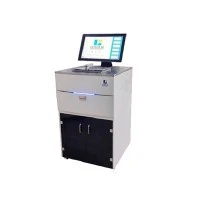

Hey there! As a microtome supplier, I often get asked about the cutting speed range of microtomes. It's a crucial factor that can significantly impact the quality of your sections and the efficiency of your work. So, let's dive right in and explore what the cutting speed range of a microtome is all about.


First off, it's important to understand that different types of microtomes have different cutting speed capabilities. We've got vibrating microtomes, semi - automatic microtomes, and manual microtomes, each with its own characteristics and speed ranges.
Let's start with the Vibrating Microtome (Vibratome). These are really handy for cutting soft tissues. The cutting speed of a vibrating microtome can vary quite a bit. Usually, the speed range is from around 0.1 mm/s to 10 mm/s. The slower end of the range, around 0.1 - 1 mm/s, is great for very delicate tissues. For example, when you're working with brain tissue or some types of embryos, a slower speed allows for more precise cutting, reducing the risk of damage to the tissue.
On the other hand, when you're dealing with tougher tissues or if you're in a bit of a hurry to get a large number of sections, you can crank up the speed to 5 - 10 mm/s. But be careful! At higher speeds, there's a greater chance of creating rough edges on the sections, so it's a bit of a balancing act.
Next up is the Semi - automatic Microtome. These microtomes offer a good mix of manual control and automated features. The cutting speed range for semi - automatic microtomes typically falls between 0.2 mm/s and 20 mm/s.
In the lower part of this range, say 0.2 - 5 mm/s, you have a lot of control over the cutting process. This is useful when you need to make very thin sections, like in histological studies where you want to examine the fine details of cells and tissues. When you increase the speed to 10 - 20 mm/s, you can quickly produce a large number of sections. However, similar to the vibrating microtome, higher speeds might lead to less - than - perfect section quality.
Now, let's talk about the Manual Microtome. Manual microtomes are a classic choice, especially for those who prefer a hands - on approach. The cutting speed of a manual microtome is mainly determined by the operator. It can be as slow as you like, almost a crawl, when you're being extremely precise. But on average, the effective cutting speed might range from 0.1 mm/s to 5 mm/s.
The advantage of a manual microtome is that you have complete control over the cutting process. You can adjust the speed based on the type of tissue you're working with and the quality of the sections you need. But it does require a bit of skill and patience, especially when you're trying to maintain a consistent speed.
There are several factors that can affect the cutting speed range of a microtome. One of the most important is the type of tissue. Soft tissues, like adipose tissue or some glandular tissues, usually require slower cutting speeds to avoid damage. Harder tissues, such as bone or dense connective tissue, can often tolerate higher speeds.
The blade you're using also plays a big role. A sharp blade can cut through tissue more easily, allowing for higher cutting speeds. Dull blades, on the other hand, may require slower speeds to prevent tearing and rough sections.
The thickness of the sections you want to cut is another factor. Thinner sections generally need slower cutting speeds to ensure accuracy, while thicker sections can often be cut at a faster pace.
So, how do you choose the right cutting speed for your microtome? Well, it's all about trial and error. Start with a slow speed, especially if you're working with a new type of tissue or a new microtome. Make a few test cuts and examine the sections under a microscope. If the sections look good, you can gradually increase the speed. But if you notice rough edges, tearing, or other issues, slow down and make adjustments.
In conclusion, understanding the cutting speed range of a microtome is essential for getting high - quality sections. Whether you're using a vibrating microtome, a semi - automatic microtome, or a manual microtome, knowing how to adjust the cutting speed based on the tissue type, blade, and section thickness will help you achieve the best results.
If you're in the market for a microtome or have any questions about the cutting speed range or other features, don't hesitate to reach out. We're here to help you find the perfect microtome for your needs and provide you with all the support you need to get the most out of it. Let's start a conversation and see how we can work together to improve your research or clinical work.
References
- Standard textbooks on histology and laboratory techniques
- Manufacturer's manuals for different types of microtomes