




Hey there! As a supplier of tissue embedders, I often get asked this question: Can a tissue embedder handle different tissue types? Well, let's dive right in and explore this topic.
First off, what exactly is a tissue embedder? In simple terms, it's a crucial piece of equipment in histology labs. It's used to infiltrate tissues with a embedding medium, usually paraffin wax, so that they can be sliced into thin sections for microscopic examination. Now, different tissues have different characteristics, and that's where the question of handling different tissue types comes in.
The Diversity of Tissue Types
Tissues in the human body (and in other organisms too) come in all shapes and sizes, with varying densities, compositions, and structures. For example, we've got soft tissues like adipose (fat) tissue, which is quite delicate and has a high lipid content. Then there are muscle tissues, which are more fibrous and have a different consistency. And let's not forget about hard tissues like bone, which is incredibly dense and mineralized.
Each of these tissue types presents unique challenges when it comes to embedding. Soft tissues can easily get damaged during the embedding process if not handled properly. They might collapse or distort, leading to inaccurate histological results. On the other hand, hard tissues require special treatment to make them suitable for embedding. Bones, for instance, need to be decalcified first to make them soft enough to be sliced.
How a Good Tissue Embedder Rises to the Challenge
A top - notch tissue embedder, like the ones we supply, is designed to handle this diversity. First of all, it has precise temperature control. Different tissues require different embedding temperatures. Soft tissues might need a lower temperature to prevent damage, while harder tissues can withstand slightly higher temperatures during the infiltration process. Our tissue embedders allow you to set and maintain the exact temperature you need for each specific tissue type.
Another important feature is the ability to control the infiltration time. Some tissues, like adipose tissue, can be infiltrated relatively quickly, while others, such as dense connective tissues, need a longer time for the embedding medium to penetrate fully. Our embedder gives you the flexibility to adjust the infiltration time according to the tissue at hand.
Let's talk about the embedding molds. A good tissue embedder comes with a variety of mold sizes and shapes. This is essential because different tissues might require different mold configurations. For example, small, delicate tissues can be placed in smaller molds, while larger specimens need bigger ones. This ensures that the tissue is properly supported during the embedding process and that the final block is of the right size for sectioning.
Specific Tissue Types and Embedding Considerations
Adipose Tissue
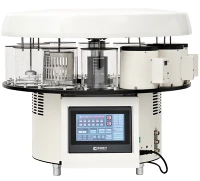
As I mentioned earlier, adipose tissue is soft and fatty. It's prone to shrinkage and distortion if the embedding process isn't carefully controlled. Our tissue embedder allows you to use a low - melting - point paraffin wax, which is gentler on the tissue. The slow infiltration process also helps to minimize damage. By using a Embedding Center Histology, you can ensure that the adipose tissue remains intact and that you get clear histological sections.
Muscle Tissue
Muscle tissue is fibrous and has a more complex structure. It needs a bit more force during the infiltration process to ensure that the paraffin wax penetrates all the fibers. Our Parrafin Embedder has a powerful pumping system that can force the wax into the muscle tissue effectively. Also, the adjustable temperature settings help to maintain the integrity of the muscle fibers during embedding.
Bone Tissue
Bone is a real challenge. Before embedding, it has to be decalcified. Once that's done, our tissue embedder can handle the embedding process. The high - temperature settings (within a safe range) can help the paraffin wax to penetrate the decalcified bone. The histology embedding station provides a stable environment for the bone tissue to be embedded, ensuring that the final block is suitable for sectioning.
The Importance of Quality and Compatibility
When it comes to handling different tissue types, the quality of the tissue embedder matters a great deal. A cheap or poorly - designed embedder might not be able to provide the precise control needed for different tissues. It could lead to inconsistent results, wasted specimens, and a lot of frustration in the lab.
Our tissue embedders are made from high - quality materials and are built to last. They are also compatible with a wide range of embedding media, not just paraffin wax. This gives you the flexibility to choose the best medium for each tissue type, depending on your specific histological requirements.


Real - World Applications
In a real - world histology lab, the ability to handle different tissue types is crucial. Pathologists rely on accurate histological sections to diagnose diseases. For example, in cancer diagnosis, they need to examine different types of tissues, such as tumor tissue, surrounding normal tissue, and lymph nodes. A tissue embedder that can handle all these different tissue types accurately is essential for making the right diagnosis.
In research labs, scientists are often studying different organisms and their tissues. They might be looking at the development of tissues in embryos, or the effects of drugs on different tissue types. Our tissue embedders can support these diverse research needs by providing high - quality embedding for a wide range of specimens.
Conclusion
So, to answer the question, yes, a good tissue embedder can handle different tissue types. Our tissue embedders, with their precise temperature control, adjustable infiltration time, variety of mold sizes, and compatibility with different embedding media, are designed to meet the challenges posed by the diversity of tissues.
If you're in the market for a tissue embedder that can handle all your tissue embedding needs, whether it's for a small clinic or a large research institution, we'd love to talk to you. Contact us to discuss your requirements and let's see how our products can fit into your histology workflow.
References
- Bancroft, J. D., & Gamble, M. (2008). Theory and Practice of Histological Techniques. Churchill Livingstone.
- Kiernan, J. A. (2008). Histological and Histochemical Methods: Theory and Practice. Oxford University Press.