

Xiaogan Kuohai Medical Technology Co., Ltd. is one of the most reliable manufacturers and suppliers of tissue processor machine in China, featured by quality products and good price. If you're going to wholesale advanced tissue processor machine made in China, welcome to get quotation from our factory. Also, customized service and 1 year warranty are available.
Custom Tissue Processor Machine Supplier!
Xiaogan Kuohai Medical Technology Co., Ltd. is one of the few pathology instrument manufacturers in China. After years of development, Kuohai Medical Technology's medical equipment users have exceeded 1,500.
Rich Product Series
Paraffin rotary microtome series,cryostat microtome series,tissue embedding center series,slide stainer series,linear tissue processor series,vacuum tissue processor series,pathological grossing workstation series,liquid based cytology processor series and consumables.
High Quality
We continuously strive to optimize the R&D process and production links. Every product undergoes meticulous design and rigorous testing procedures to ensure that it meets the expectations of our customers.
Wide Range of Application
The products we offer have extensive applications in various industries such as medical devices, biotechnology, electronic technology, high-end building materials, and decoration engineering.
Complete Qualifications
The company has successfully passed the ISO9001, ISO13485, and CE certifications, and holds numerous national patent certificates. This clearly demonstrates its position as a reliable and innovative player in the industry.
Our Related Products
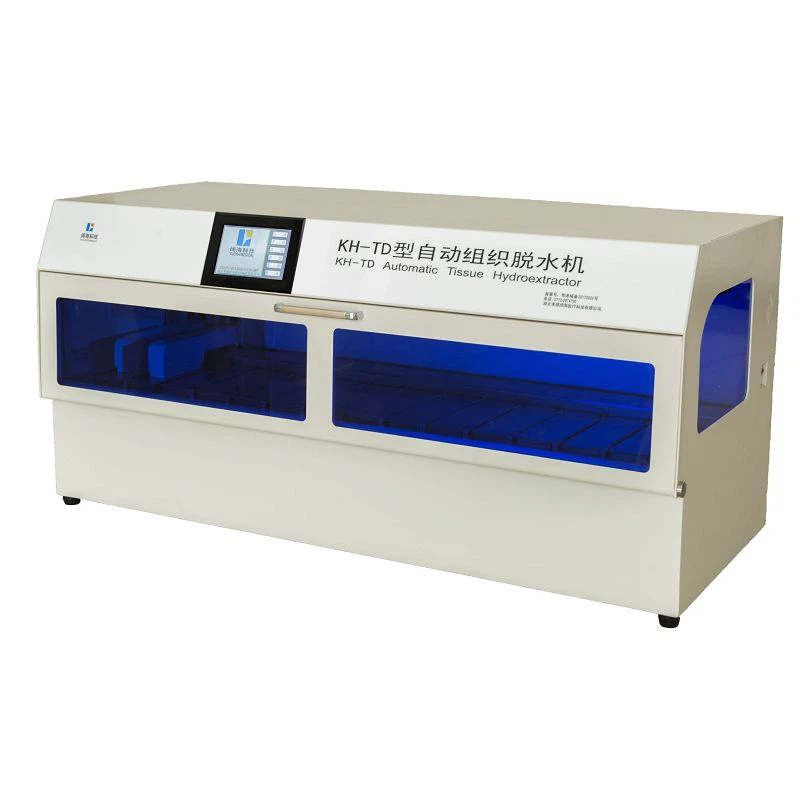
Tissue Processor in Histopathology
The tissue processor finds applications in histopathology laboratories to automatically prepare tissue samples for laboratory testing, by fixing, dehydrating, clearing, and infiltrating them with paraffin.

Tissue cassettes remain in a closed chamber and reagents are drawn in from external containers and pumped back out. Since reagent containers are closed, including the main processing chamber, this is a safer method with little chemical evaporation.

Rapid tissue processor prepares tissue samples for sectioning and microscopic examination by fixing, staining, dehydrating or decalcifying them. It is mostly single unit devices which can accommodate a variety of processing techniques therefore improving the efficiency of tissue processing.

An automatic tissue processor is a sophisticated laboratory instrument used in histology, a branch of science that deals with the study of tissues and their microscopic structure. This device plays a crucial role in the preparation of tissue samples for pathological examination, research, and diagnosis. It automates and streamlines several essential steps in tissue processing, making the workflow more efficient and consistent.

A tissue processor machine is a specialized piece of laboratory equipment used in histology and pathology laboratories for the preparation of biological tissue samples. A tissue processing machine plays a crucial role in preparing tissue specimens for embedding in paraffin wax, which allows thin sections to be cut and mounted on microscope slides.

LCD display, simple and clear
Advanced intelligent program control technology
Intelligent self-testing function, real-time display of operating status.

Fully enclosed, vacuum operation, no pollution, no carcinogenic formaldehyde, xylene and other harmful gases leakage.
What is Tissue Processor Machine
A tissue processor is used to prepare tissue samples for analysis by fixing, staining, dehydrating or decalcifying them. The processors are mostly single unit devices that can accommodate a variety of processing techniques to suit the different needs of the laboratory, therefore improving the efficiency of tissue processing.
Automated Processing
Automated Tissue Processors offer automated handling of tissue samples through the various processing steps, reducing the need for manual intervention and ensuring consistent results.
Multiple Processing Stations
Advanced auto tissue processors has the feature of multiple processing stations, each containing different reagents. This allows for parallel processing of multiple specimens, optimizing workflow efficiency.
Vacuum Capability of Tissue Processing Machine
Many tissue processors incorporate vacuum capability, which helps to facilitate the removal of air and reagent exchange during processing steps. Vacuum cycles can aid in the efficient penetration of reagents into the tissue samples, ensuring optimal processing.
Temperature Control
Automatic tissue processing machines have precise temperature control systems to maintain consistent temperatures throughout the processing cycle.
Safety Features
Automated Tissue Processors may include safety features to prevent accidents and protect users. This can include features like automatic shutoff, alarms for temperature deviations, and lid interlocks to ensure secure operation.
Compatibility and Capacity
Fully automated tissue processors come in various sizes and capacities to accommodate different laboratory needs. They may have different-sized baskets or cassettes to hold tissue samples of varying dimensions. Additionally, some machines may offer compatibility with standardized histology cassettes or other accessories.
Types of Tissue Processor Machine
Tissue Transfer Processors
These processors are characterized by the transfer of tissues, contained within a basket, through a series of stationary reagents arranged in line or in a circular carousel plane. Agitation of the fluid is achieved by vertical oscillation or rotary movement of the tissue basket.
Fluid Transfer Processors
In fluid transfer units, the processing fluids are pumped to and from a retort in which the tissues remain stationary. There are 10-12 reagent stations with adjustable temperatures between 30-45°C, 3-4 paraffin wax stations with variable temperature settings between 48-68°C, and vacuum pressure options for each station.
Open Processors
An early automated version of manual processing, the "dip and dunk" processor automatically moved tissue cassettes to various reagent containers. Most models are unsafe without the use of a fume hood since the open reagent containers allow evaporation of chemicals, such as xylene. Alcohol also absorbed water from the air, making it difficult to keep alcohol concentrations close to 100% as needed for complete dehydration. They also lacked pressure, vacuum, and temperature control and therefore processing took much longer than today's models.
Closed Processors
Tissue cassettes remain in a closed chamber and reagents are drawn in from external containers and pumped back out. Since reagent containers are closed, including the main processing chamber, this is a safer method with little chemical evaporation. Closed processors have the ability to maintain vacuum and pressure, as well as control temperature for faster and more consistent processing.
Microwave Processors
These special laboratory grade processors are used to microwave tissues/reagents for faster processing. Some models require manual reagent changes between processing steps and careful temperature monitoring. Newer models are very similar to the standard closed-chamber processors with the addition of gentle tissue/reagent heating for rapid turnaround time. Tissue size must be carefully controlled for optimal microwave processing, mainly used for biopsies and routine tissue sections less than 3 mm in thickness.
Components of Tissue Processor Machine
Control Panel: The control panel allows the user to set and monitor processing parameters such as temperature, agitation, and processing time. It provides a user-friendly interface for programming and adjusting processing protocols.
Processing Chamber: The processing chamber is where the tissue specimens are placed. It is designed to hold various sizes and types of cassettes or containers, ensuring proper immersion in the processing reagents. The chamber should be resistant to chemical damage and easy to clean.
Reagent Containers And Dispensers: Tissue processors have separate containers for each processing reagent, including fixatives, dehydrants, clearing agents, and embedding media. These containers are equipped with automatic dispensing mechanisms to ensure proper and consistent reagent delivery to the specimens.
Temperature Control System: Tissue processors have a temperature control system that maintains the desired processing temperature throughout the entire processing cycle. This ensures optimal tissue preservation and processing outcomes.
Agitation Mechanism: An agitation mechanism ensures thorough and uniform mixing of the specimens with the processing reagents. It can be in the form of oscillation, rocking, or rotation, depending on the specific tissue processor model.
Fluid Circulation System: A fluid circulation system facilitates the movement and exchange of processing reagents within the processing chamber, promoting consistent and efficient tissue processing.
Safety Features: Tissue processors should have safety features such as alarms, temperature monitoring, and emergency shut-off mechanisms to protect the specimens, operator, and instrument from potential risks or malfunctions.
Drying System: Some tissue processors also have a built-in drying system to aid in the removal of residual fluids from the processed tissues before embedding.
Programmable Protocols: Tissue processors allow the user to program and store custom processing protocols for different types of specimens. This ensures optimal processing conditions and flexibility in adapting to specific requirements.
Step-by-Step Guide on How to Clean a Tissue Processor
Safety Precautions
Before starting, ensure the tissue processor is turned off, unplugged, and cooled down to prevent any accidents.
Personal Protective Equipment (PPE)
Wear appropriate PPE, such as lab coats, gloves, and safety goggles, to protect yourself from potential exposure to hazardous chemicals or biological materials.
Cleaning Supplies
Gather the necessary cleaning supplies, including: Isopropyl alcohol or an approved disinfectant. Lint-free, non-abrasive cloths. Soft brushes for removing dust and debris. Cleaning swabs for hard-to-reach areas.
Exterior Cleaning
Wipe down the exterior surfaces of the tissue processor with a cloth dampened with isopropyl alcohol. Pay special attention to buttons, handles, and touchscreens, ensuring they are thoroughly cleaned.
Chamber Cleaning
Open the tissue processor chamber and carefully remove any used or expired reagents. Clean the chamber with isopropyl alcohol and a lint-free cloth, paying attention to the interior surfaces. Inspect the chamber for any residue or debris and remove it using a soft brush or swab.
Reagent Containers
Empty and clean the reagent containers or replace them if necessary. Ensure that there is no contamination inside the reagent containers, which could affect the tissue processing.
Filters And Ventilation
Clean or replace the filters in the tissue processor to maintain proper ventilation. Ensure that vents and airflow pathways are clear of obstructions.
Maintenance Records
Keep a record of the cleaning date, any parts replaced, and any maintenance issues encountered. Regularly inspect the tissue processor for wear and tear, and address any problems promptly.
Personal Protective Equipment (PPE)
Always wear appropriate PPE, including gloves, lab coats, and safety glasses while operating the cryostat microtome. PPE protects against potential exposure to hazardous substances and reduces the risk of injuries caused by sharp instruments.
Regular Maintenance
Regularly maintain and clean the cryostat microtome to ensure optimal performance. Lubricate moving parts, disinfect work areas and periodically check the settings for accuracy and stability. Following manufacturer guidelines is crucial for safe and effective use.
Temperature Control
Maintain stable and appropriate temperatures within the cryostat microtome to prevent thermal damage to the delicate tissue samples. Monitor the temperature using the built-in thermometer and adjust settings accordingly to prevent freezing artifacts and maintain tissue integrity.
How to Choose Tissue Processor Machine
Throughput
The number of tissue samples you plan to process in a day determines the capacity and type (vacuum or non-vacuum) of tissue processor that you should be considering. Vacuum Tissue Processors are more efficient and can achieve the same infiltration in a lesser time than non-vacuum types. The processing capacity is generally mentioned in terms of the number of tissue cassettes that the processing container can hold in one load. Check to see the options available for your requirements.
Agitation
To enhance the mass transfers between the tissue and the reagent a continuous relative movement between the two is required. Check to see if the tissue processor under consideration could do the same.
Ease of Programming
The tissue processing cycle, i.e. the time the tissue sample spends in different reagent containers/wax baths can be programmed as per user requirement. This programming can be done through mechanical pin-up timers or microprocessor-controlled software. The choice depends on the ease of use and the equipment budget. Software programming is easier to use than pin-up timers but comes at increased costs. The other advantage of software programming is that it has program memory which can store multiple running programmes so that the user does not have to feed programs again and again.
Additional Program Features
Check to see if the equipment has built-in safety features like prevention of tissue transfer to an unmelted wax bath. Delay start functions enable to program of the cycle upfront but delay the start of the cycle, this feature is helpful when the user wants to get the cycle started before the lab start time so that when he comes to the lab the tissues are already processed. Other features include end cycle alarms, low reagent alarms, auto cleaning cycles etc.
Fume Containment
Tissue Processors use reagents that emit fumes when left open. Check to see how the equipment contains these fumes. For carousel-type models, there is a lid that sits on top of the regent containers, this can cut down the reagent loss significantly. Moreover, if one needs to completely make the lab environment fumes-free, one may opt for an optional fume control system for carousel-type models. The linear and floor-standing models are better at controlling fumes as their standard models have a completely enclosed processing area that contains all the fumes.
Preventive Maintenance Procedures
Ask for preventive maintenance procedures for the equipment. Check to see if these procedures are simple or complex and the required frequency of the same. The models with easy procedures would be best suited.
Tissue Fixation
Placement of tissue section in cassettes containing fixative solution. Formalin is used as a fixative solution that also preserves the tissues. Place the cassettes in a basket or rack.
Dehydration
Move the basket containing tissue cassettes through a series of alcohol solutions. Alcohol concentration increases gradually in the dehydration process. It dehydrates the tissue.
Clearing
Move dehydrated solution through a clearing agent such as xylene. These solutions replace the alcohol present in the tissue. It makes tissue more transparent and ready for embedding with paraffin.
Infiltration
Immerse dehydrated and cleared sample in paraffin wax or similar embedding medium. Allow solidification of paraffin wax.
Sectioning
Microtome is used to cut thin sections of embedded tissue.
Staining
Place a tissue section on the slide and stain it. Hematoxylin and eosin (H&E) solution is used to stain cellular components of the tissue specimen.
Cover Slipping
Place cover slip on the tissue section after its staining and drying.
Microscopic Examination
Prepare slide is ready to be examined under a microscope.
Technical Data
| Type | Vacuum Tissue Processor |
| Model number | KH-TQ |
| Brand name | Kuohai |
| Place of origin | China |
| Instrument classification | Class I |
| Warranty | 1 year |
| After-sale service | Online technical support |
| Hanging basket filtrate time | Optional |
| Treatment cylinder volume | 3.8L |
| Number of paraffin cylinder | 4 |
| Paraffin cylinder volume: | 2.5L |
| Treatment room temperature | Adjustable from room temperature to 85°C |
| Paraffin cylinder temperature | Adjustable from room temperature to 85°C |
| Maximum single processing standard tissue cassette | 200 |
| Working air pressure | ± 70KPA |
| Stirring time | 30 seconds |
| Stirring interval: | 5 minutes |
| Power supply | 220V±10% 50HZ |
| Power | ≤1500VA |
| Size | 750*525*1260mm |
| Gross weight | 173Kg |
Certifications


Our Factory


Frequently Asked Questions
Q: What is the purpose of clearing tissue processing?
Q: What is tissue processing?
Q: What is the purpose of clearing tissue processing?
Q: What is the purpose of clearing tissue processing?
Q: Why is manual tissue processing important?
Q: What is the purpose of embedding in tissue processing?
Q: What is a tissue processor?
Q: What is a tissue processor machine used for in histology?
Q: How do you maintain a tissue processor?
Q: What are the precautions to be taken for tissue processing?
Q: What is the most important step in tissue processing?
Q: What are the steps of automated tissue processor?
Q: What maintenance is needed for histology equipment?
Q: How often does histology equipment require maintenance?
Q: What is the principle and working of automatic tissue processor?
Q: How do you maintain an automatic tissue processor?
Q: What are the advantages of a tissue processor?
Efficiency: Reduces the time needed for tissue preparation.
Quality: Enhances the preservation and clarity of tissue samples for microscopic analysis.
Q: What are the different types of tissue processors used in histology labs?
Vacuum Tissue Processors: Use vacuum and pressure to facilitate faster reagent penetration.
Microwave Tissue Processors: Accelerate processing times using microwave irradiation.
Hot Tags: tissue processor machine, China tissue processor machine manufacturers, suppliers, factory, Tissue Processor Histology, Enclosed Tissue Processor, Automated Tissue Processor, Tissue Processor Machine, Tissue Processor, Automatic Tissue Processor