


As a dedicated supplier of Glass Coverslippers, I've witnessed firsthand the pivotal role these seemingly simple tools play in various scientific and industrial applications. In this blog, I aim to delve into the concept of the transparency of a Glass Coverslipper, exploring its significance, influencing factors, and how it impacts the end - use scenarios.
Understanding the Basics of Glass Coverslipper Transparency
Transparency, in the context of a Glass Coverslipper, refers to the property that allows light to pass through the coverslipper with minimal absorption, scattering, or reflection. It is a crucial characteristic because most applications of Glass Coverslippers involve microscopy, where clear and undistorted light transmission is essential for accurate observation and analysis.
When light passes through a Glass Coverslipper, it should ideally maintain its intensity and direction. Any deviation from this ideal behavior can lead to artifacts in the microscopic image, such as reduced contrast, blurring, or the appearance of unwanted bright or dark spots. For instance, in biological microscopy, where researchers study cells and tissues, high transparency ensures that the fine details of the specimen can be clearly visualized.
The Importance of Transparency in Different Applications
Biological Microscopy
In biological research, Glass Coverslippers are used to cover specimens on microscope slides. The high transparency of the coverslipper is vital for observing the internal structures of cells, such as the nucleus, mitochondria, and endoplasmic reticulum. These structures are often very small and have low contrast, so any loss of light or distortion due to poor transparency can make them difficult or impossible to see. For example, in fluorescence microscopy, where specific molecules in the specimen are labeled with fluorescent dyes, a transparent coverslipper allows the excitation light to reach the specimen and the emitted fluorescent light to pass through to the detector without significant loss.
Material Science
In material science, Glass Coverslippers are used to examine the surface and internal structure of materials. Transparency is important for analyzing the crystal structure, grain boundaries, and defects in materials. A clear view through the coverslipper enables scientists to accurately measure the size and shape of these features, which is crucial for understanding the material's properties and performance. For instance, in the study of semiconductor materials, the transparency of the coverslipper helps in detecting impurities and structural irregularities that can affect the material's electrical conductivity.
Industrial Quality Control
In industrial settings, Glass Coverslippers are used for quality control purposes. For example, in the manufacturing of electronic components, the transparency of the coverslipper allows inspectors to check for defects such as cracks, scratches, or foreign particles on the surface of the components. A high - transparency coverslipper ensures that these defects can be easily identified, reducing the risk of faulty products reaching the market.
Factors Affecting the Transparency of a Glass Coverslipper
Glass Composition
The composition of the glass used to make the coverslipper has a significant impact on its transparency. Different types of glass have different optical properties, depending on the elements and compounds they contain. For example, borosilicate glass is often used for Glass Coverslippers because it has a high transparency in the visible light spectrum and is resistant to thermal and chemical damage. On the other hand, soda - lime glass may have lower transparency and is more prone to scratches and chemical corrosion.
Manufacturing Process
The manufacturing process also plays a crucial role in determining the transparency of a Glass Coverslipper. During the production, any impurities or inhomogeneities in the glass can reduce its transparency. For instance, if the glass is not properly melted or annealed, it may contain air bubbles or stress regions, which can scatter light and cause a decrease in transparency. Additionally, the surface finish of the coverslipper is important. A smooth and polished surface allows light to pass through more easily than a rough or scratched surface.
Thickness
The thickness of the Glass Coverslipper can affect its transparency. Generally, thinner coverslippers have higher transparency because there is less material for the light to pass through, reducing the chances of absorption and scattering. However, the thickness also needs to be balanced with the mechanical strength of the coverslipper. If the coverslipper is too thin, it may break easily during handling or use.
Measuring the Transparency of a Glass Coverslipper
There are several methods for measuring the transparency of a Glass Coverslipper. One common method is to use a spectrophotometer, which measures the amount of light transmitted through the coverslipper at different wavelengths. The results are usually presented as a transmission spectrum, which shows the percentage of light transmitted as a function of wavelength. A high - transparency coverslipper will have a transmission spectrum that is close to 100% in the visible light range.
Another method is to use a microscope with a calibrated light source. By comparing the brightness of an image taken through the coverslipper with a reference image, the transparency of the coverslipper can be estimated. This method is often used in practical applications, such as in a laboratory setting, where a quick and simple assessment of the coverslipper's transparency is required.


Our Glass Coverslippers: Ensuring High Transparency
As a supplier of Glass Coverslipper, we take great care to ensure the high transparency of our products. We use high - quality borosilicate glass in our manufacturing process, which has excellent optical properties and is resistant to various environmental factors. Our advanced manufacturing techniques, including precise melting, annealing, and polishing processes, minimize the presence of impurities and inhomogeneities in the glass, resulting in coverslippers with high transparency.
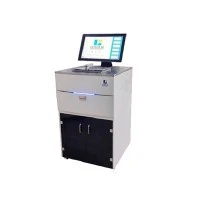
We also offer Automated Glass Coverslipper solutions, which are designed to provide consistent and reliable performance. These automated coverslippers are manufactured with strict quality control measures to ensure that each coverslipper meets our high standards of transparency.
Conclusion and Call to Action
The transparency of a Glass Coverslipper is a critical factor in its performance in various scientific and industrial applications. Whether you are a researcher in a biology lab, a scientist in a material science institute, or an inspector in an industrial quality control department, the quality of the coverslipper's transparency can significantly impact your work.
At our company, we are committed to providing high - quality Glass Coverslippers with excellent transparency. If you are interested in purchasing our products or have any questions about our Glass Coverslippers, please feel free to contact us. We look forward to discussing your specific requirements and helping you find the best coverslipper solution for your needs.
References
- Principles of Microscopy by Michael W. Davidson
- Handbook of Glass Manufacture by Dominic R. Uhlmann and Narottam P. Bansal
- Optical Properties of Glass by John T. DeVore