


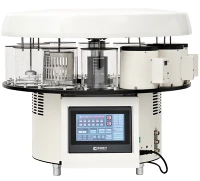



In the realm of medical and biological research, slide stainers play a crucial role in the preparation of specimens for microscopic examination. One of the key aspects that researchers and pathologists often consider is the staining color stability of a slide stainer. As a supplier of slide stainers, I am well - versed in this topic and would like to delve into what staining color stability means, its importance, and how our products ensure optimal performance in this regard.

Understanding Staining Color Stability
Staining color stability refers to the consistency of the staining color intensity and hue over time and across multiple staining runs. When preparing biological specimens on slides, different stains are used to highlight specific cellular or tissue components. For example, hematoxylin and eosin (H&E) staining is a common technique used to visualize the general structure of tissues. The color of the stained cells and tissues should be reproducible, allowing for accurate diagnosis and comparison between different samples.
Inconsistent staining color can lead to misinterpretation of results. If the color intensity varies from one slide to another, it becomes difficult to determine whether the observed differences are due to biological variations or staining artifacts. Moreover, over time, if the staining color fades or changes, the long - term storage and archival of slides become problematic.
Factors Affecting Staining Color Stability
Several factors can influence the staining color stability of a slide stainer.
Stain Quality
The quality of the stains used is of utmost importance. Low - quality stains may contain impurities or have inconsistent chemical compositions, which can lead to variable staining results. Our slide stainers are designed to work with high - quality stains that are carefully formulated to ensure consistent coloration. We recommend using stains from reputable manufacturers and following their storage and handling instructions to maintain stain quality.
Staining Process Parameters
The staining process parameters, such as the duration of staining, temperature, and the concentration of stains, can significantly impact color stability. For instance, if the staining time is too short, the cells may not be adequately stained, resulting in a pale color. On the other hand, over - staining can lead to a dark and uneven color. Our Automated Stainer allows for precise control of these parameters, ensuring that each slide is stained under optimal conditions. The automated system can accurately dispense the right amount of stain and maintain a consistent temperature throughout the staining process.
Slide Surface and Preparation
The surface of the slide and the way the specimen is prepared also affect staining color stability. Slides that are not properly cleaned or coated may cause uneven staining. Additionally, improper fixation of the specimen can lead to poor stain penetration and inconsistent coloration. Our slide stainers are compatible with a wide range of slide types and can accommodate different specimen preparation methods. We provide guidelines on slide preparation to our customers to ensure the best possible staining results.
How Our Slide Stainers Ensure Staining Color Stability
As a slide stainer supplier, we have developed our products with a focus on ensuring staining color stability.
Advanced Technology
Our Automatic Slide Stainer utilizes advanced technology to control the staining process precisely. The automated system is equipped with sensors that monitor and adjust the staining parameters in real - time. For example, it can detect changes in temperature and adjust the heating or cooling system accordingly to maintain a constant staining environment. This level of control helps to minimize variations in staining color from one slide to another.
Quality Control
We implement strict quality control measures during the manufacturing process of our slide stainers. Each unit is thoroughly tested to ensure that it meets our high standards of performance. We also conduct regular calibration checks to maintain the accuracy of the staining parameters. Our quality control team monitors the staining color stability of slides stained using our products to identify and address any potential issues.
Customization Options
We understand that different research and diagnostic applications may have specific requirements for staining color stability. Therefore, our slide stainers offer customization options. Users can adjust the staining parameters according to their needs, such as the staining time, temperature, and stain concentration. This flexibility allows for optimal staining results in a variety of applications.
Importance of Staining Color Stability in Different Applications
Medical Diagnosis
In medical diagnosis, accurate staining is essential for the detection and identification of diseases. For example, in cancer diagnosis, the staining of tumor cells can help pathologists determine the type and stage of the cancer. Consistent staining color allows for reliable interpretation of the slides, which is crucial for making informed treatment decisions. Our slide stainers are widely used in hospitals and diagnostic laboratories, where the need for high - quality, stable staining is paramount.
Biological Research
In biological research, staining color stability is important for studying cell and tissue development, function, and interactions. Researchers often need to compare stained specimens from different experimental groups or time points. Stable staining color ensures that the observed differences are due to biological factors rather than staining artifacts. Our slide stainers support a wide range of biological research applications, from basic cell biology to complex tissue engineering studies.
Conclusion
Staining color stability is a critical factor in the performance of slide stainers. As a slide stainer supplier, we are committed to providing products that ensure consistent and reliable staining results. Our Automated Stainer combines advanced technology, strict quality control, and customization options to meet the diverse needs of our customers in medical diagnosis and biological research.
If you are interested in learning more about our slide stainers or would like to discuss your specific staining requirements, we encourage you to contact us for a procurement discussion. We look forward to working with you to achieve the best possible staining results for your applications.
References
- Bancroft, J. D., & Gamble, M. (2008). Theory and Practice of Histological Techniques. Churchill Livingstone.
- Kiernan, J. A. (2008). Histological and Histochemical Methods: Theory and Practice. Oxford University Press.
- Miron, P. J., & Miron, C. (2011). Manual of Histological Staining Method of the Armed Forces Institute of Pathology. McGraw - Hill.