


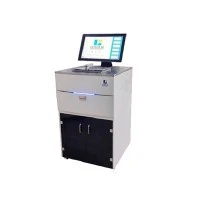
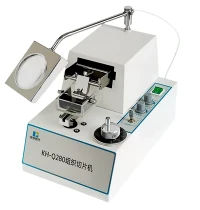
Yo! As a cryostat microtome supplier, I often get asked about the transport and storage conditions for these nifty pieces of equipment. Cryostat microtomes are super important in various scientific and medical fields, and getting the transport and storage right is crucial to keep them in tip - top shape.
Transport Conditions
Let's start with transport. First off, packaging is key. Cryostat microtomes are delicate instruments, and they need to be packed like they're precious cargo because, well, they are! We use high - density foam padding to surround the cryostat. This foam acts as a shock absorber, protecting the internal components from any jolts or bumps during transit. It's like giving the cryostat a big, cozy hug to keep it safe.
When it comes to the outer packaging, we opt for sturdy wooden crates. These crates are built to last and can withstand the rigors of transportation. They're also weather - resistant to some extent, which is great considering that the cryostat microtome might be exposed to different environmental conditions during its journey.
The orientation during transport is something that often gets overlooked but is really vital. Cryostat microtomes should be kept in an upright position at all times. Most of these devices have liquid nitrogen or other cryogenic substances inside, and if they're tilted or laid on their side, it can lead to leaks. A leak not only means losing the cryogenic fluid but can also damage the internal components of the cryostat.
Temperature control during transport is another major factor. We try to keep the temperature inside the transport vehicle as stable as possible. Extreme temperatures can cause the materials in the cryostat microtome to expand or contract, which can lead to mechanical stress and damage. For long - distance transports, we sometimes use specialized temperature - controlled trucks. These trucks are equipped with sensors that constantly monitor the temperature and can adjust the heating or cooling as needed.
Now, vibrations are the enemy during transport. Trucks, trains, and even airplanes can produce a lot of vibrations. To combat this, we use vibration - dampening materials in the packaging. These materials absorb the vibrations and prevent them from reaching the cryostat microtome. Think of it as a shield that protects the cryostat microtome from the harmful effects of shaking.
Storage Conditions
Moving on to storage, the first thing to consider is the location. The storage area should be dry. Moisture can cause rust and corrosion on the metal parts of the cryostat microtome. Even a small amount of rust can affect the performance of the instrument over time. So, we recommend storing the cryostat in a place where the humidity is kept below 60%. This can usually be achieved by using dehumidifiers in the storage area.


The temperature in the storage area also matters. We suggest keeping the temperature between 10°C and 30°C. Extremely cold temperatures can cause the cryogenic fluids to solidify, and extremely hot temperatures can cause the internal components to overheat. It's like Goldilocks' porridge – the temperature needs to be just right.
The storage area should also be clean. Dust and debris can get into the cryostat microtomeand cause blockages or damage to the moving parts. Regularly cleaning the storage area and using air filters can help keep the environment clean. You wouldn't want your cryostat to be sitting in a dusty corner, would you?
When it comes to long - term storage, it's important to maintain the cryogenic fluid levels. If the cryostat microtomeuses liquid nitrogen, for example, you need to periodically refill it. This ensures that the internal components stay at the right temperature and are protected.
Specific Considerations for Different Types of Cryostat microtomes
There are different types of cryostat microtomes, and each has its own unique set of requirements. For example, Cryostat microtomes Semi - Automatic are often used in research labs. These cryostat microtomes, because of their semi - automated nature, have more complex internal components. During transport, extra care needs to be taken to protect the electronic parts. We use anti - static packaging to prevent any static electricity from damaging the circuits.
Cryotome is another type of cryostat microtome. These are commonly used in medical settings for preparing tissue samples. Their blades are extremely sharp and need to be protected during transport. We use special blade guards and separate compartments in the packaging to ensure that the blades don't get damaged or cause any harm.
Cryostat microtome combines the functions of a cryostat and a microtome. They are precision instruments, and any misalignment during transport or storage can affect their performance. We use alignment tools during the packaging process to make sure that all the components are in the correct position before storing or shipping.
Importance of Proper Transport and Storage
Getting the transport and storage conditions right is not just about protecting the cryostat microtome. It's also about ensuring that it performs at its best when it reaches the end - user. A damaged cryostat microtome can lead to inaccurate results in scientific research or medical diagnoses. This can have serious consequences, both in terms of time and money.
For example, if a cryostat microtome arrives at a research lab with a damaged internal component, the researchers might have to wait weeks for a replacement part. This can delay their experiments and set back their research progress. In a medical setting, a malfunctioning cryotome can lead to poor - quality tissue samples, which can make it difficult for doctors to make an accurate diagnosis.
Invitation to Contact for Purchase
If you're in the market for a cryostat microtome, whether it's a Cryostats Semi - Automatic, Cryotome, or Cryostat Microtome, we're here to help. We have a wide range of high - quality cryostat microtomes that come with our guarantee of proper transport and storage. We take pride in delivering our products in perfect condition, so you can focus on what you do best – your scientific research or medical work.
If you have any questions or want to discuss your specific requirements, don't hesitate to reach out. We're always happy to have a chat and find the right cryostat microtome for your needs. Let's work together to make sure you get the best equipment with the best care.
References
- Handbook of Cryogenic Engineering
- Scientific Instrumentation: Design and Application