


Testing the performance of a fume hood is super important, whether you're running a lab or just looking to keep your workspace safe. As a fume hood supplier, I've seen firsthand how crucial a well - functioning fume hood is. Let's dig into the details of how to test the performance of these essential pieces of equipment.
1. Visual Inspection
First off, you should start with a basic visual check. Look for any obvious signs of damage, like cracks in the sash, dents in the body, or loose parts. A damaged fume hood won't work as well as one that's in good condition. Check the seals around the sash to make sure they're intact. If there are gaps, air can leak in and out, reducing the hood's effectiveness at containing fumes.
Also, look at the interior of the fume hood. Make sure it's clean and free of debris. If there's a buildup of chemicals or other materials, it can affect the airflow and the overall performance. You can find a wide range of fume hoods on our website, including Chemical Fumb Hood and Laboratory Fume Hood, that are designed to meet high - quality standards.
2. Airflow Velocity Testing
One of the most critical aspects of fume hood performance is the airflow velocity. There are a few ways to measure this. A typical method is to use an anemometer. You can measure the face velocity, which is the speed of the air flowing into the fume hood at the opening.
You should measure the airflow at multiple points across the face of the fume hood. This helps to ensure that the airflow is uniform. If there are areas with much lower or higher velocities, it could indicate a problem with the ductwork or the blower system.
The recommended face velocity for a fume hood usually ranges from 0.3 to 0.5 m/s (60 - 100 fpm). However, it can vary depending on the type of work being done in the hood. For example, if you're working with highly toxic chemicals, you might need a higher face velocity.
3. Containment Testing
Containment testing is all about making sure that the fume hood can effectively keep fumes and chemicals inside. One common way to perform this test is by using a tracer gas. You release a small amount of a non - toxic tracer gas inside the fume hood and then use detectors outside the hood to see if any of the gas escapes.
Another method is the smoke test. You can use a smoke tube or a smoke generator to create a visible plume of smoke inside the hood. Then, observe how the smoke behaves. It should be drawn smoothly into the hood and exhausted out. If you see any eddies or areas where the smoke doesn't flow correctly, it could mean that the fume hood isn't containing the contaminants properly.
4. Noise and Vibration Testing
Noise and vibration can be indicators of a problem with the fume hood's blower or ductwork. Excessive noise can be a sign of a worn - out motor or a problem with the fan blades. Vibration can also cause issues, as it might loosen parts over time and affect the overall stability of the fume hood.
You can use a sound level meter to measure the noise level of the fume hood. The acceptable noise level usually depends on the environment where the fume hood is located. In a laboratory, for example, you generally want to keep the noise level below 60 - 70 decibels to avoid disturbing the people working nearby.
5. Lighting Testing
Proper lighting is essential inside a fume hood. You need to be able to see what you're doing clearly. Use a light meter to measure the illuminance levels inside the hood. The recommended minimum illuminance level is around 500 lux.
If the lighting is too dim, it can increase the risk of errors during experiments and make it difficult to spot any potential spills or leaks. You might need to adjust the position of the lights or replace the bulbs if they're old or burned out.
6. Sash Functionality Testing
The sash is the sliding window on the front of the fume hood. It's crucial that it opens and closes smoothly and that the safety features work properly. Check if the sash can be opened and closed easily without any sticking or jamming.
Also, test the sash's auto - closing feature if it has one. This is an important safety measure, as it can prevent people from accidentally leaving the sash open, which would reduce the fume hood's effectiveness.
Regular Maintenance and Testing Schedule
To keep your fume hood performing at its best, it's important to have a regular maintenance and testing schedule. You should do a basic visual inspection at least once a week and more in - depth testing every few months. The frequency of the in - depth tests can depend on how often the fume hood is used and the type of work being done in it.

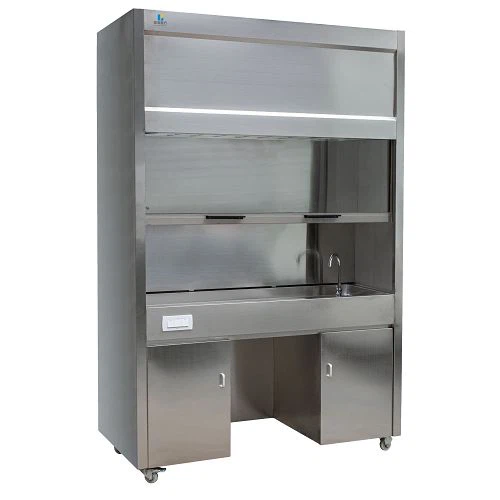
If you're in the market for a new fume hood or need advice on testing your existing one, we've got you covered. Our Lab Fume Hood selection provides a variety of options to meet different needs.
Contact for Purchase and Further Discussion
If you're interested in purchasing a fume hood or have any questions about our products and the testing process, don't hesitate to reach out to us. We're here to help you make the best choice for your laboratory or workspace.
References
- "Fume Hood Performance: A Guide to Evaluation and Use" by the American Industrial Hygiene Association
- Various industry standards and guidelines related to laboratory safety and fume hood operation.