





Hey there! As a supplier of slide stainers, I often get asked a bunch of questions about what these nifty machines can and can't do. One question that's popped up more than a few times lately is, "Can a slide stainer be used for staining nematode slides?" Well, let's dive right in and find out.
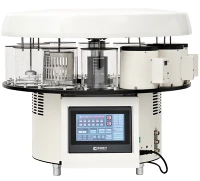
First off, let's talk a bit about what a slide stainer is. For those of you who aren't in the know, a slide stainer is a device that automates the process of staining microscope slides. It's super handy because it takes out the guesswork and human error that can come with manual staining. You've got different types, like the Automated Stainer and the Automatic Slide Stainer. These bad boys can handle a whole bunch of slides at once, making them a real time - saver in a busy lab.
Now, onto nematodes. Nematodes are tiny worms that are all over the place, from soil to water and even inside other organisms. Studying them is important in a bunch of fields, like agriculture (to see if they're harming crops), biology (to understand their life cycles), and even medicine (since some nematodes can cause diseases in humans). To study nematodes under a microscope, you usually need to stain them. Staining helps to highlight different parts of the nematode, like the cuticle, organs, or internal structures, so you can see them more clearly.
So, can a slide stainer be used for staining nematode slides? The short answer is yes, but there are a few things to keep in mind.

Compatibility with Nematode Samples
One of the first things you need to think about is whether the slide stainer is compatible with nematode samples. Nematodes are delicate little critters, and the staining process needs to be gentle enough not to damage them. Most modern slide stainers, like the Automated Stainer, are designed to handle a variety of samples, but you still need to make sure the staining protocol you use is appropriate for nematodes.
For example, the reagents used in the staining process need to be carefully chosen. Some stains might be too harsh and could distort the nematode's structure. You'll want to use stains that are known to work well with nematodes, like iodine - based stains or certain fluorescent dyes. The slide stainer should be able to handle these stains without any issues, but it's always a good idea to test it out on a small batch of samples first.
Sample Preparation
Another important factor is sample preparation. Before you can put nematode samples into a slide stainer, you need to get them ready. This usually involves fixing the nematodes to the slide so they don't move around during the staining process. You can use a fixative like formalin or ethanol to do this.
Once the nematodes are fixed, you might need to permeabilize them. This means making tiny holes in the cuticle so the stain can get inside and color the internal structures. Different slide stainers might have different requirements for sample preparation, so you'll need to check the manufacturer's instructions.
Staining Protocol
The staining protocol is crucial when using a slide stainer for nematode slides. You need to make sure the timing and sequence of the staining steps are just right. For example, some stains might need to be incubated with the nematodes for a certain amount of time at a specific temperature. The slide stainer should be able to control these parameters accurately.
Most slide stainers come with pre - programmed staining protocols, but you might need to customize them for nematode samples. This could involve adjusting the duration of each step, the temperature, or the flow rate of the reagents. It might take a bit of trial and error to find the perfect protocol, but once you do, you'll get consistent and high - quality results.
Advantages of Using a Slide Stainer for Nematode Staining
There are several advantages to using a slide stainer for staining nematode slides. One of the biggest is consistency. Manual staining can be a bit hit - or - miss, with different people getting different results. A slide stainer, on the other hand, will follow the same protocol every time, so you'll get more consistent staining across all your samples.
It's also a lot faster. In a busy lab, time is of the essence. A slide stainer can stain multiple slides at once, which means you can get through a large number of nematode samples in a shorter amount of time compared to manual staining.
Another advantage is precision. Slide stainers can control the amount of stain and the duration of each step very precisely. This means you can get more accurate and detailed staining, which is especially important when studying the fine structures of nematodes.
Challenges and Limitations
Of course, there are also some challenges and limitations when using a slide stainer for nematode staining. One challenge is the cost. Slide stainers can be quite expensive, especially the more advanced models. If you're a small lab or just starting out, this might be a bit of a barrier.
Another limitation is that not all slide stainers are created equal. Some might not be able to handle the specific requirements of nematode staining, like the gentle handling of delicate samples or the use of certain stains. You'll need to do your research and choose a slide stainer that's well - suited for nematode work.
Conclusion
So, to sum it up, a slide stainer can definitely be used for staining nematode slides. It offers a lot of advantages in terms of consistency, speed, and precision. However, you need to make sure the slide stainer is compatible with nematode samples, pay close attention to sample preparation and staining protocols, and be aware of the challenges and limitations.
If you're interested in using a slide stainer for your nematode research, I'd be more than happy to help you find the right one for your needs. We've got a range of Automated Stainers and Automatic Slide Stainers that are designed to handle a variety of samples, including nematodes. Just reach out, and we can have a chat about your specific requirements and see how we can assist you in getting the best results for your nematode staining.
References
- Blaxter, M. L. (2003). "The evolutionary biology of nematodes." In The Biology of Nematodes, edited by R. N. Perry and D. J. Wright. CABI Publishing.
- Poinar, G. O. (1983). The Natural History of Nematodes. Prentice - Hall.
- Wright, D. J., and Perry, R. N. (eds.). (2006). Nematode behaviour. CABI.