


In the dynamic landscape of medical research and clinical practice, the importance of a safe and controlled environment cannot be overstated. One crucial aspect of maintaining such an environment is the effective management of fumes, vapors, and airborne contaminants. This is where portable fume hoods come into play. As a leading supplier of portable fume hoods, I am often asked whether these devices can be used in a medical environment. In this blog post, I will explore this question in detail, examining the capabilities, limitations, and considerations of using portable fume hoods in medical settings.
Understanding Portable Fume Hoods
Before delving into their suitability for medical environments, it's essential to understand what portable fume hoods are and how they work. A portable fume hood is a self - contained ventilation device designed to capture and remove hazardous fumes, vapors, and particulate matter from the air. Unlike traditional, fixed - installation fume hoods, portable fume hoods are compact, lightweight, and can be easily moved from one location to another.
These hoods typically consist of a work surface, a transparent enclosure, and a ventilation system. The ventilation system draws air into the hood through an intake, passes it through a filtration system to remove contaminants, and then expels the clean air back into the environment. Portable fume hoods can be powered by electricity or battery, offering flexibility in terms of usage and placement.
The Need for Fume Control in Medical Environments
Medical environments, including laboratories, clinics, and research facilities, often involve the use of various chemicals, drugs, and biological agents. These substances can release harmful fumes, vapors, and aerosols that pose risks to the health and safety of medical staff, patients, and the environment.
For example, in a medical laboratory, researchers may work with volatile chemicals such as formaldehyde, ethanol, and benzene during specimen preparation, chemical analysis, and drug development. These chemicals can cause respiratory problems, skin irritation, and even cancer if inhaled or absorbed through the skin. In a clinical setting, the use of disinfectants, anesthetic gases, and chemotherapy drugs can also generate hazardous fumes that need to be properly managed.
Advantages of Using Portable Fume Hoods in Medical Environments
-
Flexibility and Mobility
One of the primary advantages of portable fume hoods is their flexibility and mobility. In a medical environment, the need for fume control may arise in different locations at different times. For instance, a researcher may need to conduct a chemical experiment in a temporary workspace or a clinician may need to use a fume - generating device in a patient's room. Portable fume hoods can be easily transported to the required location and set up quickly, providing immediate fume control where it is needed. -
Cost - Effectiveness
Compared to traditional fixed - installation fume hoods, portable fume hoods are generally more cost - effective. They require less upfront investment in terms of installation and infrastructure, and they can be used in multiple locations without the need for extensive modifications to the building. This makes them an attractive option for medical facilities with limited budgets or those that need to manage fume control on a project - by - project basis. -
Space - Saving
Medical facilities often have limited space, especially in laboratories and clinics. Portable fume hoods are designed to be compact and take up less floor space compared to their fixed counterparts. This allows medical staff to make the most of the available space and maintain a clutter - free work environment. -
Quick Deployment
In emergency situations or when there is an urgent need for fume control, portable fume hoods can be deployed quickly. For example, if there is a chemical spill or a sudden release of hazardous fumes in a medical laboratory, a portable fume hood can be immediately moved to the affected area to contain and remove the contaminants, minimizing the risk of exposure to personnel.
Considerations and Limitations
While portable fume hoods offer many advantages, there are also some considerations and limitations to keep in mind when using them in a medical environment.
-
Filtration Efficiency
The effectiveness of a portable fume hood depends largely on its filtration system. Different types of contaminants require different types of filters. For example, particulate matter can be removed by high - efficiency particulate air (HEPA) filters, while chemical fumes may require activated carbon filters. In a medical environment, where a wide range of contaminants may be present, it is crucial to ensure that the portable fume hood is equipped with the appropriate filters and that they are regularly maintained and replaced to maintain optimal filtration efficiency. -
Airflow and Ventilation
Proper airflow and ventilation are essential for the effective operation of a portable fume hood. In a medical environment, the airflow rate and direction need to be carefully controlled to ensure that fumes are captured and removed efficiently. Additionally, the ventilation system should be designed to prevent the recirculation of contaminated air back into the workspace. Some portable fume hoods may have limitations in terms of airflow capacity, which may not be sufficient for large - scale or high - volume fume - generating activities. -
Compliance with Regulations
Medical facilities are subject to various regulations and standards regarding the management of hazardous materials and the protection of personnel and the environment. When using portable fume hoods, it is important to ensure that they comply with relevant regulations, such as those set by the Occupational Safety and Health Administration (OSHA) and the National Fire Protection Association (NFPA). This may include requirements for filtration efficiency, airflow rates, and safety features. -
Noise Level
Some portable fume hoods may generate noise during operation, which can be a distraction in a medical environment, especially in areas where quiet is required, such as patient rooms or research laboratories. It is important to choose a portable fume hood with a low noise level to minimize the impact on the work environment.
Applications in Medical Environments
Portable fume hoods can be used in a variety of applications in medical environments, including:
-
Medical Laboratories
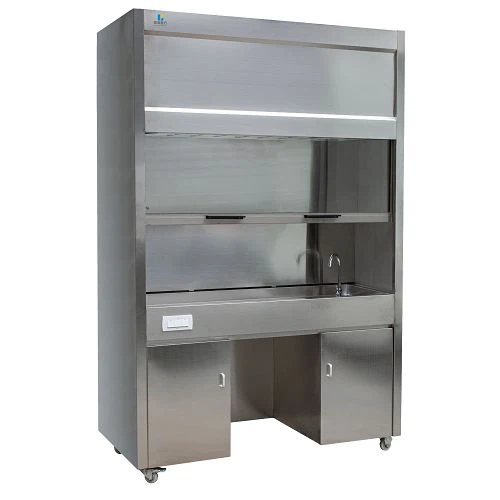
In medical laboratories, portable fume hoods can be used for tasks such as chemical analysis, specimen preparation, and drug development. For example, when working with volatile chemicals or biological agents, a portable fume hood can provide a safe and controlled environment to prevent the release of hazardous fumes and aerosols. You can learn more about suitable fume hoods for laboratory use at Lab Fume Hood.
-
Clinics and Patient Care Areas
In clinics and patient care areas, portable fume hoods can be used to manage fumes generated by disinfectants, anesthetic gases, and chemotherapy drugs. For instance, when administering chemotherapy to a patient, a portable fume hood can be used to capture and remove the fumes from the chemotherapy drugs, protecting the patient and the medical staff from exposure. -
Research Facilities
In research facilities, portable fume hoods can be used for a wide range of research activities, including tissue culture, genetic engineering, and microbiology. These activities often involve the use of chemicals and biological agents that can release hazardous fumes, and a portable fume hood can provide a flexible and effective solution for fume control. If you are involved in chemistry - related research, you might be interested in our Chemistry Fume Hood and Chemistry Fume Hood options.
Conclusion
In conclusion, portable fume hoods can be a valuable tool in a medical environment, offering flexibility, cost - effectiveness, and quick deployment for fume control. However, it is important to carefully consider their capabilities, limitations, and compliance with regulations before using them. By choosing the right portable fume hood and ensuring proper maintenance and operation, medical facilities can effectively manage hazardous fumes and protect the health and safety of their personnel and patients.
If you are interested in learning more about our portable fume hoods or would like to discuss your specific needs for fume control in a medical environment, we encourage you to contact us for a detailed consultation and procurement discussion. Our team of experts is ready to assist you in finding the best solution for your fume control requirements.
References
- Occupational Safety and Health Administration (OSHA). (2023). Hazardous Waste Operations and Emergency Response Standard.
- National Fire Protection Association (NFPA). (2023). NFPA 45: Standard on Fire Protection for Laboratories Using Chemicals.
- American National Standards Institute (ANSI). (2023). ANSI/AIHA Z9.5: Laboratory Ventilation.