



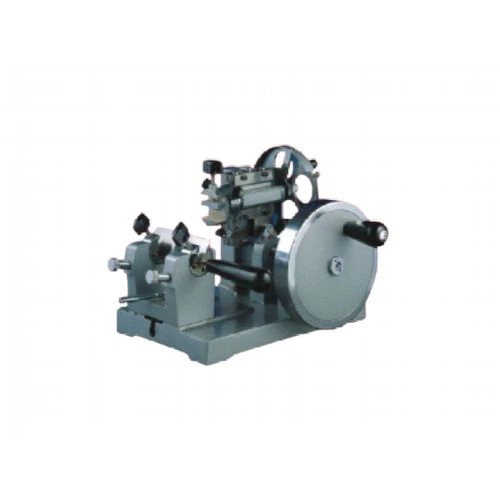
Xiaogan Kuohai Medical Technology Co., Ltd. is one of the most reliable manufacturers and suppliers of tissue microtome in China, featured by quality products and good price. If you're going to wholesale advanced tissue microtome made in China, welcome to get quotation from our factory. Also, customized service and 1 year warranty are available.
Pathological rotary microtome section thickness range: 1-25um
Pathological rotary microtome section adjustment index is as small as 1um
The section section of pathological rotary microtome was as large as 35×25mm
Pathological rotary microtome size: 300×280×280mm
3-product packing and shipping details
(1) Before the product leaves the factory, our company will strictly inspect and debug all components of the machine and equipment, and test whether the equipment can be used and installed normally.
(2) In order to prevent the product from being squeezed and damaged during long-distance transportation, we will use thick foam to fix the four corners of the product, and use standard export wooden boxes for external packaging.
(3) If you need OEM and ODM services and have separate product packaging solutions and logo printing standards, please communicate your plans and standards with us in advance. We can package the product according to your requirements.
(4) Transportation methods: a combination of sea, land, railway, air, and express delivery.
FAQ

Q: What is a microtome used for in pathology?
A: A microtome is used to cut thin sections of tissues for microscopic examination in pathology.
Q: How does a microtome contribute to histological research?
A: Microtomes allow researchers to obtain thin tissue sections, facilitating the study of cellular structures under a microscope.
Q: Can you explain the basic principle behind microtome operation?
A: Microtomes operate by mechanically slicing tissues into thin sections using a sharp cutting blade.
Q: What role does the microtome play in the preparation of pathology slides?
A: Microtomes are essential for preparing thin, uniform sections of tissues that can be mounted on slides for microscopic examination.
Q: How does the microtome contribute to the diagnosis of diseases in pathology?
A: Microtomes aid pathologists in obtaining high-quality tissue sections for accurate diagnosis and evaluation of diseases.
Q: Are there different types of microtomes used in pathology?
A: Yes, microtomes come in various types, including rotary microtomes, sliding microtomes, and cryostats, each designed for specific applications.
Q: What are the key considerations when selecting a microtome for a pathology laboratory?
A: Factors such as section thickness control, specimen size compatibility, and ease of operation are crucial when choosing a microtome.
Q: How does a microtome without an external casing differ from traditional microtomes?
A: A microtome without an external casing may lack certain protective features but still performs the fundamental function of tissue sectioning.
Q: Can you discuss the importance of section thickness control in microtome operation?
A: Precise control over section thickness is critical in microtome operation to ensure accurate histological analysis.
Q: What are the safety precautions when using a microtome without a housing?
A: Users must exercise caution to prevent accidents, as a microtome without a housing may expose moving parts.
Hot Tags: tissue microtome, China tissue microtome manufacturers, suppliers, factory, Automatic Microtome, Microtome, Manual Microtome, Tissue Microtome, Rotary Microtome, Semi automatic Microtome


