



Hey there! As a supplier of tissue processors, I often get asked about using our equipment for plant tissues. It's an interesting topic because plant tissues come with their own unique set of challenges compared to animal tissues. So, let's dig into what modifications are needed if you're planning to use a tissue processor for plant tissues.

Understanding the Basics of Tissue Processing
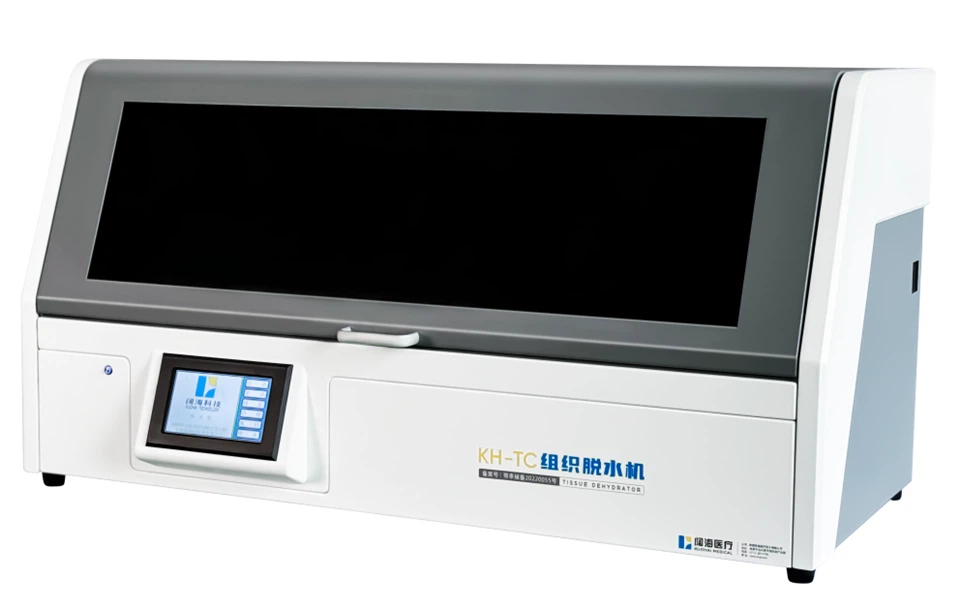
First off, let's quickly go over what a tissue processor does. A Tissue Processor Machine is a device that prepares biological samples for microscopic examination. It goes through a series of steps like fixation, dehydration, clearing, and infiltration with paraffin wax. This process makes the tissue firm enough to be sliced into thin sections for staining and viewing under a microscope.
Differences Between Plant and Animal Tissues
Plant tissues are quite different from animal tissues. For starters, plant cells have a rigid cell wall made of cellulose. This cell wall is tough and can be a real pain to penetrate during the tissue processing steps. Animal cells, on the other hand, don't have this cell wall, so they're generally easier to process.
Another difference is the presence of large vacuoles in plant cells. These vacuoles can take up a significant amount of space within the cell and can affect the penetration of processing reagents. In addition, plant tissues often contain a lot of starch, lipids, and other substances that can interfere with the processing.
Modifications Needed for Plant Tissues
Fixation
Fixation is the first step in tissue processing, and it's crucial for preserving the structure of the tissue. When it comes to plant tissues, the standard fixatives used for animal tissues might not work as well. For example, formalin, which is commonly used for animal tissues, may not penetrate the plant cell wall effectively.
One option is to use a fixative that contains a combination of chemicals like ethanol, acetic acid, and formaldehyde. This mixture can help break down the cell wall and preserve the tissue structure. Another approach is to use a vacuum infiltration system during fixation. This system applies a vacuum to the tissue sample, which helps the fixative penetrate the cells more quickly and evenly.
Dehydration
Dehydration is the process of removing water from the tissue. In plant tissues, this can be a bit tricky because of the cell wall and vacuoles. The standard dehydration series used for animal tissues, which typically involves a gradient of ethanol concentrations, may not be sufficient for plant tissues.
To ensure complete dehydration, you may need to extend the time in each ethanol concentration or use a different dehydration agent. For example, tertiary butyl alcohol (TBA) can be used as an alternative to ethanol. TBA has a lower surface tension than ethanol, which allows it to penetrate the cell wall more easily.
Clearing
Clearing is the step where the dehydrating agent is replaced with a clearing agent that is miscible with paraffin wax. In plant tissues, the cell wall and other substances can make it difficult for the clearing agent to penetrate.
One modification is to use a clearing agent that has a higher solubility for plant components. For example, xylene is a commonly used clearing agent for animal tissues, but it may not work as well for plant tissues. Instead, you can try using cedarwood oil or chloroform, which have better solubility for plant materials.
Infiltration and Embedding
Infiltration is the process of replacing the clearing agent with molten paraffin wax, and embedding is the final step where the tissue is placed in a mold and surrounded by solidified paraffin wax. In plant tissues, the cell wall and other substances can affect the infiltration of paraffin wax.
To ensure proper infiltration, you may need to increase the time and temperature during the infiltration process. You can also use a vacuum infiltration system to help the paraffin wax penetrate the cells more effectively. In addition, you may need to use a harder grade of paraffin wax for plant tissues to ensure that the tissue sections can be cut smoothly.
Our Tissue Processors for Plant Tissues
At our company, we offer a range of Tissue Processor Machines that can be modified for use with plant tissues. Our Rapid Tissue Processor is designed to handle a variety of tissue types, including plant tissues. It has a user-friendly interface that allows you to customize the processing parameters to meet the specific needs of your plant samples.
We also have a Benchtop Tissue Processor for hist;ology and pathology lab that is perfect for smaller labs or research facilities. This benchtop model is compact and easy to use, and it can be modified to accommodate plant tissues.
Conclusion
Using a tissue processor for plant tissues requires some modifications to the standard processing protocol. These modifications are necessary to overcome the unique challenges posed by plant tissues, such as the cell wall, vacuoles, and other substances. By making these adjustments, you can ensure that your plant tissue samples are properly processed and ready for microscopic examination.
If you're interested in learning more about using our tissue processors for plant tissues or have any questions about the modifications needed, please don't hesitate to contact us. We're here to help you find the best solution for your tissue processing needs.
References
- Jensen, W. A. (1962). Botanical Histochemistry: Principles and Practice. W. H. Freeman and Company.
- Ruzin, S. E. (1999). Plant Microtechnique and Microscopy. Oxford University Press.
- Feder, N., & O'Brien, T. P. (1968). Plant Microtechnique: Some Principles and New Methods. American Journal of Botany, 55(10), 123-142.