


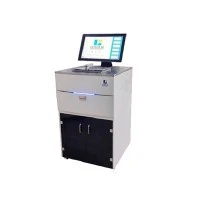

The medico - legal investigation is a meticulous and crucial process that aims to determine the cause and manner of death, often with significant legal implications. In this complex field, the autopsy table plays an indispensable role. As a supplier of autopsy tables, I have witnessed firsthand how these specialized pieces of equipment contribute to the accuracy and efficiency of medico - legal investigations.
The Foundation of Autopsy Procedures
At the heart of any autopsy is the autopsy table. It serves as the primary workspace where forensic pathologists conduct their examinations. The design of an autopsy table is tailored to meet the specific needs of the autopsy process. It provides a stable and clean surface on which the body can be placed for a thorough examination.
One of the key features of a high - quality autopsy table is its adjustability. Forensic pathologists may need to change the height, angle, or position of the body during the examination. An adjustable autopsy table allows them to do so with ease, reducing physical strain and ensuring that they can access all parts of the body effectively. This adjustability is essential for conducting a comprehensive autopsy, as it enables the pathologist to examine the body from different perspectives, which can be crucial in detecting subtle injuries or abnormalities.
Ensuring Hygiene and Safety
Hygiene is of utmost importance in a medico - legal investigation. The autopsy table must be designed to prevent the spread of infectious diseases and to facilitate easy cleaning. Our autopsy tables are made from high - grade, non - porous materials that are resistant to corrosion and can be easily disinfected. This not only protects the forensic pathologists and other personnel involved in the investigation but also ensures the integrity of the evidence.
In addition to hygiene, safety is another critical aspect. Autopsy tables are equipped with features such as side rails to prevent the body from accidentally falling off the table during the examination. They also have proper drainage systems to collect and dispose of body fluids safely. These safety features are designed to minimize the risk of accidents and to create a safe working environment for the forensic team.
Facilitating Documentation and Evidence Collection
During a medico - legal investigation, accurate documentation and evidence collection are essential. The autopsy table can be equipped with various accessories to aid in this process. For example, some autopsy tables come with built - in cameras or lighting systems that can be used to document the external and internal appearance of the body. This visual documentation can be used as evidence in court and can also be shared with other experts for consultation.
Moreover, the autopsy table can be designed to accommodate the collection of biological samples. Forensic pathologists may need to collect blood, tissue, or other samples for toxicological, histological, or genetic analysis. Our autopsy tables are designed with compartments and trays that can be used to store and organize these samples, ensuring that they are properly labeled and preserved for further analysis.
Compatibility with Other Equipment
In a modern medico - legal laboratory, the autopsy table needs to be compatible with other equipment used in the investigation. For example, it should be able to work in conjunction with imaging devices such as X - ray machines or CT scanners. Our autopsy tables are designed with this in mind, and they can be easily integrated with other forensic equipment, allowing for a seamless workflow.
Furthermore, the autopsy table can be used in combination with specialized equipment such as Grossing Station for Histology. These stations are used for the dissection and preparation of tissue samples for histological examination. By using an autopsy table that is compatible with a grossing station, forensic pathologists can streamline the process of tissue collection and preparation, improving the efficiency of the investigation.
The Role in Forensic Research
Autopsy tables also play a role in forensic research. Researchers may use autopsy tables to study rare or unusual cases, to develop new techniques for forensic analysis, or to validate existing methods. The data collected during autopsies conducted on these tables can contribute to the advancement of forensic science, leading to more accurate and reliable medico - legal investigations in the future.


Conclusion and Call to Action
In conclusion, the autopsy table is a vital component in a medico - legal investigation. It provides a stable workspace, ensures hygiene and safety, facilitates documentation and evidence collection, is compatible with other equipment, and contributes to forensic research. As a supplier of autopsy tables, we are committed to providing high - quality products that meet the needs of the forensic community.
If you are involved in medico - legal investigations and are in need of a reliable autopsy table, or if you are interested in learning more about our Grossing Table or Grossing Station for Histopathology, please do not hesitate to contact us. We would be more than happy to discuss your requirements and provide you with the best solutions for your forensic laboratory.
References
- DiMaio, V. J. M., & DiMaio, D. (2001). Forensic pathology. CRC Press.
- Byard, R. W. (2011). Sudden and unexpected death in infancy, childhood and adolescence. Cambridge University Press.
- Knight, B. (2004). Knight's forensic pathology. Arnold.