




Hey there! As a supplier of cryostats, I often get asked about the heat transfer efficiency of these nifty devices. So, I thought I'd take a deep dive into this topic and share some insights with you.


First off, let's understand what a cryostat is. A cryostat is a device used to maintain low temperatures for various applications, like in scientific research, medical labs, and even some industrial processes. It's like a super - cold refrigerator that can keep things at extremely low temperatures, sometimes close to absolute zero.
Now, heat transfer efficiency is a crucial factor when it comes to cryostats. Simply put, it's about how well the cryostat can remove heat from the sample or the area it's supposed to cool and transfer it to the outside environment. A high - efficiency cryostat will be able to cool things down quickly and maintain a stable low temperature with less energy consumption.
There are three main types of heat transfer: conduction, convection, and radiation. In a cryostat, all these types play a role, but their significance varies depending on the design and application of the cryostat.
Conduction is the transfer of heat through a solid material. In a cryostat, heat can conduct through the walls of the container holding the sample and the various components inside. For example, if the sample is placed on a metal platform, heat from the sample can conduct through the metal to the colder parts of the cryostat. To improve conduction - based heat transfer efficiency, we often use materials with high thermal conductivity. Metals like copper and aluminum are great choices because they can quickly transfer heat away from the sample.
Convection, on the other hand, involves the movement of fluids (liquids or gases) to transfer heat. In some cryostats, a coolant fluid is circulated around the sample. As the fluid absorbs heat from the sample, it becomes warmer and rises, and then cooler fluid moves in to take its place. This continuous circulation helps in removing heat from the sample. To enhance convection - based heat transfer, we design the flow paths of the coolant carefully. We might use pumps to ensure a steady and efficient flow of the coolant.
Radiation is the transfer of heat through electromagnetic waves. Even at low temperatures, objects emit and absorb radiation. In a cryostat, we try to minimize the heat transfer by radiation. We use materials with low emissivity on the inner surfaces of the cryostat. These materials don't radiate heat as easily, which helps in maintaining a cold environment inside the cryostat.
Now, let's talk about how the heat transfer efficiency affects the performance of a cryostat. A cryostat with high heat transfer efficiency can cool a sample down to the desired temperature much faster. This is crucial in applications where time is of the essence, like in some medical research where samples need to be analyzed quickly.
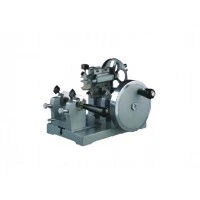
It also helps in maintaining a stable temperature. When the heat transfer is efficient, any small amount of heat that enters the cryostat can be quickly removed, keeping the temperature constant. This stability is essential for accurate experimental results. For example, in a Cryostat Microtome Click here, which is used to cut thin slices of frozen tissue samples, a stable low temperature is required to ensure clean and precise cuts.
Another advantage of high heat transfer efficiency is energy savings. A cryostat that can transfer heat effectively doesn't need to consume as much energy to maintain the low temperature. This not only reduces the operating costs but also makes the cryostat more environmentally friendly.
There are several factors that can affect the heat transfer efficiency of a cryostat. The design of the cryostat is a major one. A well - designed cryostat will have optimized flow paths for the coolant, proper insulation to minimize heat gain from the outside, and efficient heat - conducting components.
The quality of the materials used also matters a great deal. As I mentioned earlier, using high - thermal - conductivity materials for conduction and low - emissivity materials for radiation control can significantly improve the heat transfer efficiency.
The operating conditions can also impact the efficiency. For example, if the ambient temperature is very high, the cryostat will have to work harder to remove the heat, which can reduce its efficiency.
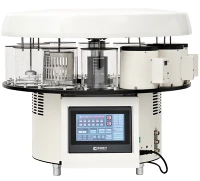
Now, we offer different types of cryostats to meet various needs. Our Cryostat Microtome With Touch Screen is a great option for those who need precise control over the cutting process. It has been designed with high heat transfer efficiency in mind, so it can quickly cool the tissue samples and maintain a stable temperature during the cutting process.
We also have Cryostats Semi - Automatic that are suitable for a range of applications. These cryostats are designed to be user - friendly while still providing excellent heat transfer efficiency.
If you're in the market for a cryostat, heat transfer efficiency should be one of your top considerations. A high - efficiency cryostat can save you time, money, and ensure more accurate results in your experiments or processes.
Whether you're a researcher in a scientific lab, a medical professional in a hospital, or someone involved in an industrial process that requires low temperatures, our cryostats can meet your needs. We're always here to help you choose the right cryostat for your specific application.
If you're interested in learning more about our cryostats or want to discuss a potential purchase, feel free to reach out to us. We'd love to have a chat and see how we can assist you in getting the best cryostat for your requirements.
References:
- Incropera, F. P., & DeWitt, D. P. (2002). Fundamentals of Heat and Mass Transfer. Wiley.
- Cengel, Y. A. (2003). Heat Transfer: A Practical Approach. McGraw - Hill.