


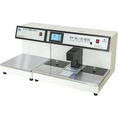
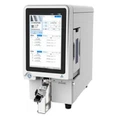
In the field of medical and biological research, a slide stainer is an indispensable tool. It plays a crucial role in enhancing the visibility of cells and tissues under a microscope, enabling researchers and medical professionals to conduct detailed observations and diagnoses. As a supplier of slide stainers, I am well - versed in the cost - effectiveness of these devices, and I am eager to share my insights with you.
1. Understanding the Basics of Slide Stainers
Before delving into cost - effectiveness, it's essential to understand what a slide stainer is. A slide stainer is a device used to apply stains to microscope slides. There are two main types: manual and automated. Manual slide stainers require the user to perform each step of the staining process, such as adding reagents, rinsing, and drying, by hand. On the other hand, Automatic Slide Stainer and Automated Slide Stainer can perform these tasks automatically, following a pre - programmed protocol.
2. Initial Investment
The first aspect of cost - effectiveness is the initial investment. Manual slide stainers are generally less expensive than their automated counterparts. They have a simpler design and fewer components, which means a lower purchase price. However, the low initial cost of a manual slide stainer comes with a trade - off. Manual operation requires more time and labor, which can be a significant drawback in high - throughput laboratories.
Automated slide stainers, although more expensive upfront, offer several advantages that can offset the higher cost. They can handle a large number of slides simultaneously, reducing the time per slide. For example, in a busy hospital pathology department where hundreds of slides need to be stained daily, an Automated Stainer can significantly increase the efficiency of the staining process.
3. Labor Costs
Labor costs are a major factor in determining the cost - effectiveness of a slide stainer. Manual staining is a labor - intensive process. It requires trained personnel to carefully perform each step of the staining protocol. In a large laboratory, the time spent on manual staining can add up quickly, resulting in high labor costs.
Automated slide stainers, on the contrary, can reduce labor costs significantly. Once the machine is programmed, it can operate independently, allowing laboratory staff to focus on other tasks. This not only saves time but also reduces the risk of human error, which can lead to inaccurate staining results. For instance, a technician can load a batch of slides into an automated stainer and then move on to other analytical work, such as sample preparation or data analysis.
4. Reagent Consumption
Reagent consumption is another important consideration. Manual staining often leads to over - use of reagents because it is difficult to control the exact amount of reagent applied to each slide. This can result in higher reagent costs over time.
Automated slide stainers are designed to dispense reagents precisely. They can measure and apply the exact amount of each reagent required for staining, minimizing waste. Some advanced automated stainers also have features that allow for reagent recycling, further reducing reagent costs. For example, the waste reagent from one staining cycle can be filtered and reused in subsequent cycles, which is not possible with manual staining methods.
5. Maintenance and Long - term Costs
Maintenance is an inevitable part of owning any laboratory equipment. Manual slide stainers are relatively simple in design, which usually means lower maintenance costs. They have fewer moving parts, and the components are easier to access and replace. However, if not maintained properly, manual stainers can still experience problems, such as clogging of reagent channels or uneven staining due to improper cleaning.
Automated slide stainers, while more complex, often come with comprehensive maintenance plans from the manufacturer. These plans can include regular servicing, software updates, and replacement of worn - out parts. Although the maintenance cost of an automated stainer may be higher in the short term, in the long run, it can extend the lifespan of the device and ensure consistent staining quality. A well - maintained automated stainer can operate for many years, providing a stable and reliable staining solution for the laboratory.
6. Quality and Reproducibility
The quality and reproducibility of staining results are crucial in medical and research applications. Manual staining is highly dependent on the skill and experience of the operator. Even a small variation in technique can lead to inconsistent staining results, which can affect the accuracy of diagnoses and research findings.
Automated slide stainers offer high - quality and reproducible staining results. They follow a pre - programmed protocol precisely, ensuring that each slide is stained under the same conditions. This consistency is essential for reliable research and accurate medical diagnoses. For example, in cancer research, consistent staining of tissue samples is necessary to compare different samples and identify specific biomarkers.
7. Throughput and Productivity
In a laboratory setting, throughput and productivity are key performance indicators. Manual slide stainers have a limited throughput because they require individual handling of each slide. In a high - volume laboratory, this can lead to bottlenecks in the workflow.
Automated slide stainers can significantly increase throughput. They can process multiple slides at once, reducing the overall staining time. For example, an automated stainer can stain 50 - 100 slides in one cycle, while a manual stainer may only be able to handle a few slides at a time. This increased throughput can lead to higher productivity and faster turnaround times for test results, which is especially important in clinical settings.
8. Conclusion and Call to Action
In conclusion, the cost - effectiveness of a slide stainer depends on various factors, including initial investment, labor costs, reagent consumption, maintenance, quality, and throughput. While manual slide stainers may have a lower initial cost, automated slide stainers offer significant advantages in terms of labor savings, reagent efficiency, quality, and productivity.
If you are considering purchasing a slide stainer for your laboratory, it is important to carefully evaluate your specific needs and budget. As a trusted supplier of slide stainers, we are committed to providing high - quality products that offer excellent cost - effectiveness. We understand the unique requirements of different laboratories and can help you choose the most suitable slide stainer for your application.


If you are interested in learning more about our slide stainers or would like to discuss your specific needs, please feel free to contact us. Our team of experts is ready to assist you in making an informed decision.
References
- Smith, J. (2018). Laboratory Equipment: A Comprehensive Guide. New York: Academic Press.
- Jones, A. (2019). Advances in Slide Staining Technology. Journal of Medical Laboratory Research, 35(2), 123 - 135.
- Brown, C. (2020). Cost - Benefit Analysis of Laboratory Equipment. London: Routledge.