


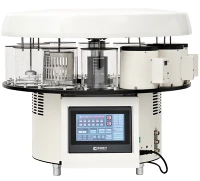
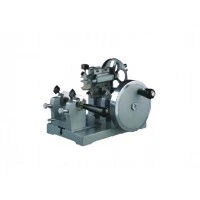


A cryostat is a sophisticated scientific instrument used in various fields, including medical research, biology, and materials science. It is designed to maintain a low and stable temperature environment for samples, which is crucial for preserving their integrity and enabling precise analysis. As a cryostat supplier, I have in - depth knowledge of the key components that make up a high - quality cryostat. In this blog, I will explore these essential elements in detail.
Cooling System
The cooling system is the heart of a cryostat. Its primary function is to lower and maintain the temperature inside the cryostat chamber at the desired level. There are several types of cooling systems commonly used in cryostats.
Compressor - based Cooling
Compressor - based cooling systems are widely employed in cryostats. They work on the principle of the vapor - compression refrigeration cycle. A compressor compresses a refrigerant gas, increasing its pressure and temperature. The hot, high - pressure gas then flows through a condenser, where it releases heat and condenses into a liquid. The liquid refrigerant passes through an expansion valve, which reduces its pressure and temperature. As it evaporates in the evaporator coil inside the cryostat chamber, it absorbs heat from the surroundings, thus cooling the chamber.
One of the advantages of compressor - based cooling is its relatively high cooling capacity. It can achieve and maintain a wide range of low temperatures, making it suitable for various applications. However, it also has some limitations. Compressor - based systems can be noisy, and they require regular maintenance to ensure the proper functioning of the compressor and refrigerant circuit.
Liquid Nitrogen Cooling
Liquid nitrogen (LN₂) cooling is another popular method in cryostats. Liquid nitrogen has a very low boiling point (-196°C), which makes it an excellent coolant. In a LN₂ - cooled cryostat, liquid nitrogen is stored in a reservoir and is gradually introduced into the cryostat chamber. As the liquid nitrogen evaporates, it absorbs a large amount of heat, rapidly cooling the chamber.
The main advantage of LN₂ cooling is its ability to reach extremely low temperatures quickly. It is also relatively simple in design and does not require complex mechanical components like compressors. However, the use of liquid nitrogen has some drawbacks. It is expensive to purchase and store, and there is a continuous need to refill the LN₂ reservoir, which can be inconvenient.


Chamber
The chamber of a cryostat is where the sample is placed and maintained at the desired low temperature. It is designed to provide a controlled environment that minimizes heat transfer from the outside.
Insulation
Insulation is a critical aspect of the chamber design. High - quality insulation materials, such as vacuum panels or multi - layer insulation, are used to reduce heat transfer by conduction, convection, and radiation. Vacuum panels work by creating a vacuum between two layers of material, which significantly reduces heat conduction. Multi - layer insulation consists of multiple layers of reflective materials separated by thin spacers, which help to reduce radiation heat transfer.
Chamber Design
The chamber design also plays an important role in maintaining a stable temperature. It should have a smooth interior surface to minimize heat transfer and allow for easy cleaning. Some cryostat chambers are designed with multiple compartments or shelves to accommodate different types of samples or to perform multiple experiments simultaneously.
Microtome
A microtome is an essential component in many cryostats, especially those used in histological research. A Cryotome is a specialized microtome designed to cut thin sections of frozen samples at low temperatures.
Cutting Mechanism
The cutting mechanism of a cryotome is designed to provide precise and consistent cuts. It typically consists of a blade holder, a sample holder, and a drive system. The blade holder holds the cutting blade in place, and the sample holder secures the frozen sample. The drive system moves the sample holder towards the blade at a controlled speed, allowing for the cutting of thin sections.
Adjustability
A good cryotome should have a high degree of adjustability. This includes the ability to adjust the cutting thickness, the cutting speed, and the angle of the blade. The ability to adjust these parameters allows researchers to obtain the best possible sections for their specific applications.
Temperature Control System
The temperature control system is responsible for maintaining the desired temperature inside the cryostat chamber. It consists of a temperature sensor, a controller, and a heating or cooling device.
Temperature Sensor
The temperature sensor is used to measure the temperature inside the chamber. Common types of temperature sensors used in cryostats include thermocouples and resistance temperature detectors (RTDs). Thermocouples work based on the Seebeck effect, where a voltage is generated at the junction of two different metals due to a temperature difference. RTDs, on the other hand, change their electrical resistance with temperature.
Controller
The controller receives the temperature signal from the sensor and compares it with the set - point temperature. Based on this comparison, it sends a signal to the heating or cooling device to adjust the temperature inside the chamber. Modern cryostats often use digital controllers, which offer high precision and flexibility in temperature control.
Heating and Cooling Devices
In addition to the main cooling system, cryostats may also be equipped with heating devices. These are used to fine - tune the temperature inside the chamber, especially when small temperature adjustments are required. Heating devices can be in the form of electric heaters or Peltier devices.
Touch Screen Interface
Many modern cryostats are now equipped with a Cryostat Microtome With Touch Screen. A touch - screen interface provides a user - friendly way to control and monitor the cryostat.
Ease of Use
The touch - screen interface allows users to easily set the temperature, cutting parameters, and other operating conditions. It provides a graphical display of the current status of the cryostat, including the temperature, cutting speed, and remaining liquid nitrogen level. This makes it easier for users to operate the cryostat, even if they are not highly trained technicians.
Data Logging and Connectivity
Some touch - screen interfaces also offer data - logging capabilities. They can record and store data such as temperature, cutting thickness, and operating time. This data can be useful for quality control and research purposes. Additionally, modern cryostats may be equipped with connectivity options, such as USB or Ethernet ports, which allow for remote monitoring and control.
Safety Features
Safety is a top priority when using a cryostat. There are several safety features that are commonly included in cryostats.
Over - temperature Protection
Over - temperature protection is designed to prevent the cryostat from overheating. It typically consists of a temperature sensor and a controller. If the temperature inside the chamber exceeds a pre - set limit, the controller will automatically shut off the heating device or activate the cooling system to bring the temperature back to a safe level.
Pressure Relief Valves
In cryostats that use liquid nitrogen or other compressed gases, pressure relief valves are installed to prevent the build - up of excessive pressure. These valves open automatically when the pressure inside the cryostat exceeds a certain limit, releasing the excess gas and preventing damage to the cryostat.
Emergency Stop Button
An emergency stop button is provided on the cryostat control panel. In case of an emergency, such as a malfunction or a safety hazard, the user can press the emergency stop button to immediately shut down the cryostat.
As a cryostat supplier, we understand the importance of these key components in providing a high - quality and reliable cryostat. Whether you are a researcher in a medical laboratory or a scientist in a materials science institute, our cryostats are designed to meet your specific needs. If you are interested in purchasing a cryostat or have any questions about our products, please feel free to contact us for a detailed discussion and procurement negotiation.
References
- ASM Handbook Volume 6: Welding, Brazing, and Soldering. ASM International.
- Principles of Cryogenic Engineering. Richard W. Swift.
- Microtomy and Microtomes: A Practical Guide. John Kiernan.