


As a fume hood supplier, I've witnessed firsthand the critical role these essential laboratory fixtures play in ensuring the safety and efficiency of scientific research. Fume hoods are designed to protect laboratory personnel from harmful fumes, vapors, and dust generated during experimental processes. However, with the increasing focus on sustainability and energy conservation in recent years, energy efficiency has become a significant consideration for both laboratory operators and fume hood manufacturers.

1. Understanding the Energy Consumption of Fume Hoods
Fume hoods are notorious for their high energy consumption. They continuously draw in large volumes of air from the laboratory and exhaust it outside, which requires substantial amounts of energy to heat or cool the replacement air. Typically, a fume hood can consume as much energy as an average three - bedroom house. The primary factors contributing to their high energy use include:
- Airflow rate: The airflow rate through a fume hood, measured in cubic feet per minute (CFM), is a key determinant of its energy consumption. Higher airflow rates are often required to maintain proper containment of hazardous substances, but they also mean more energy is needed to move the air.
- Operational time: Fume hoods are often kept running 24/7, even when they are not in use. This continuous operation significantly increases energy consumption over time.
- Sash position: The position of the fume hood sash, the transparent window that allows access to the interior of the hood, affects the airflow rate. A fully open sash requires a much higher airflow rate than a partially closed one, leading to increased energy use.
2. Energy - Efficiency Strategies for Fume Hoods
2.1 Low - Flow Fume Hoods
One of the most effective ways to improve the energy efficiency of fume hoods is to use low - flow models. These hoods are designed to maintain proper containment of hazardous substances at lower airflow rates. By reducing the airflow required, low - flow fume hoods can significantly decrease energy consumption without compromising safety.
2.2 Variable Air Volume (VAV) Systems
Variable air volume (VAV) systems are another important energy - saving technology for fume hoods. Unlike constant air volume (CAV) systems, which maintain a fixed airflow rate regardless of the sash position or the hood's usage, VAV systems adjust the airflow rate based on these factors. When the sash is closed or the hood is not in use, the VAV system reduces the airflow, thereby saving energy.
2.3 Smart Controls and Sensors
Installing smart controls and sensors on fume hoods can also enhance energy efficiency. These devices can detect the presence of users or the sash position and automatically adjust the airflow rate accordingly. For example, when a user leaves the vicinity of the fume hood, the sensor can trigger a reduction in airflow until the user returns.
2.4 Energy - Recovery Systems
Energy - recovery systems can be used to capture and reuse the heat or cold energy from the exhaust air of fume hoods. This recovered energy can then be used to pre - condition the incoming replacement air, reducing the energy required for heating or cooling. There are several types of energy - recovery systems available, including heat exchangers and run - around coils.
3. Benefits of Energy - Efficient Fume Hoods
3.1 Cost Savings
The most obvious benefit of energy - efficient fume hoods is the potential for significant cost savings. By reducing energy consumption, laboratory operators can lower their utility bills, which can be a substantial expense over time. Additionally, in some regions, there may be incentives or rebates available for using energy - efficient equipment, further reducing the cost of ownership.
3.2 Environmental Sustainability
Energy - efficient fume hoods contribute to environmental sustainability by reducing the overall energy demand and associated greenhouse gas emissions. As the scientific community becomes more environmentally conscious, adopting energy - efficient practices in the laboratory is an important step towards a greener future.
3.3 Compatibility with Modern Laboratory Design
Modern laboratory designs often prioritize energy efficiency and sustainability. Energy - efficient fume hoods are more compatible with these designs and can help laboratories meet the requirements of green building certifications such as LEED (Leadership in Energy and Environmental Design).
4. Our Company's Offerings in Energy - Efficient Fume Hoods
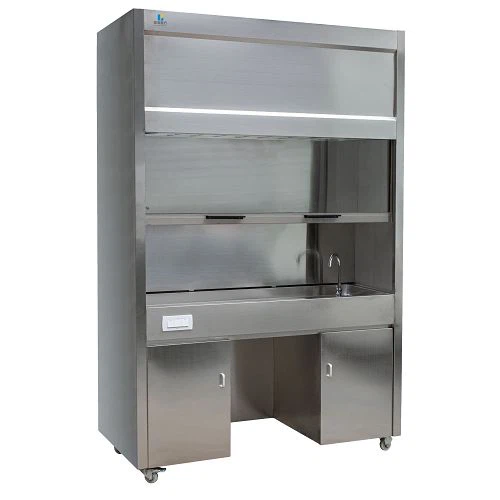
As a leading fume hood supplier, we are committed to providing our customers with high - quality, energy - efficient fume hoods. Our product range includes Lab Fume Hood and Chemistry Fume Hood models that incorporate the latest energy - saving technologies.
- Low - Flow Design: Our fume hoods are engineered with a low - flow design that maintains excellent containment performance at reduced airflow rates. This not only saves energy but also reduces noise levels in the laboratory.
- VAV Systems: We offer fume hoods equipped with state - of - the - art VAV systems. These systems ensure that the airflow rate is precisely adjusted according to the sash position and the hood's usage, maximizing energy efficiency.
- Smart Controls and Sensors: Our fume hoods are integrated with smart controls and sensors that provide real - time monitoring and adjustment of airflow. This intelligent technology helps to further optimize energy consumption.
- Energy - Recovery Options: For customers who are particularly concerned about energy efficiency, we provide energy - recovery systems that can be integrated with our fume hoods. These systems help to recover and reuse valuable energy, reducing the overall energy footprint of the laboratory.
5. Making the Right Choice
When selecting an energy - efficient fume hood for your laboratory, it is important to consider several factors:
- Safety first: The primary function of a fume hood is to protect laboratory personnel from hazardous substances. Ensure that any energy - efficient model you choose meets all relevant safety standards and provides adequate containment.
- Laboratory requirements: Different laboratories have different requirements in terms of airflow rate, sash design, and chemical compatibility. Consider your specific laboratory needs when selecting a fume hood.
- Long - term cost analysis: While the initial cost of an energy - efficient fume hood may be higher than a standard model, it is important to conduct a long - term cost analysis. Factor in the potential energy savings over the lifespan of the hood to determine the most cost - effective option.
6. Conclusion and Call to Action
Energy efficiency is a crucial consideration for fume hoods, offering significant cost savings, environmental benefits, and compatibility with modern laboratory designs. As a fume hood supplier, we are dedicated to providing our customers with the best energy - efficient solutions. Our Lab Fume Hood and Chemistry Fume Hood models are designed to meet the highest standards of safety and energy efficiency.
If you are interested in learning more about our energy - efficient fume hoods or would like to discuss your specific laboratory requirements, we encourage you to contact us for a consultation. Our team of experts is standing by to assist you in making the right choice for your laboratory.
References
- American National Standards Institute (ANSI)/Association for the Advancement of Medical Instrumentation (AAMI) standards for laboratory ventilation.
- Laboratory Ventilation Best Practices Guide published by environmental and energy research institutions.
- Technical reports from fume hood manufacturers on energy - saving technologies and their performance.