




Hey there, fellow histology enthusiasts! As a supplier of tissue embedders, I've seen firsthand the crucial role these machines play in the world of histology. Today, I'm going to share with you the advantages of using a tissue embedder in histology.
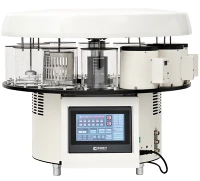
First off, let's talk about what a tissue embedder actually is. A tissue embedder is a device used in histology laboratories to embed tissue samples in a solid medium, usually paraffin wax. This process is essential for preparing tissue samples for sectioning and subsequent microscopic examination.
One of the biggest advantages of using a tissue embedder is the improvement in sample quality. When you embed tissue samples properly, you ensure that they are well - preserved and oriented correctly. This means that when the samples are sectioned, the resulting slices are more uniform and of higher quality. With a good tissue embedder, you can precisely control the temperature and the embedding process. For example, maintaining the right temperature of the paraffin wax is crucial. If the wax is too hot, it can damage the tissue; if it's too cold, it won't penetrate the tissue evenly. Our tissue embedders are designed to maintain a stable temperature, which helps in getting consistent and high - quality embeddings. You can check out our Embedding Center Histology for more details on how our products ensure top - notch sample quality.
Another great advantage is the time - saving aspect. Manual embedding of tissue samples can be a very labor - intensive and time - consuming process. It requires a high level of skill and patience. A single sample can take a long time to embed correctly, especially if you have to deal with multiple samples. But with a tissue embedder, the process is automated. You can set up the machine to embed multiple samples at once, and it will do the job much faster than a human operator. This allows your lab technicians to focus on other important tasks, such as staining and analyzing the samples. For instance, our histology embedding station is designed for high - throughput embedding, which means you can embed a large number of samples in a relatively short period of time.
Consistency is also a key benefit. In histology, consistency is crucial for accurate diagnosis and research. When you embed samples manually, there is always a risk of human error. Different technicians may have different embedding techniques, which can lead to variations in the quality of the embedded samples. A tissue embedder eliminates this problem. It follows a set of pre - programmed steps every time, ensuring that each sample is embedded in the same way. This consistency is especially important in large - scale research projects where you need to compare results across multiple samples. Our paraffin embedding station is engineered to provide consistent results, making it a reliable choice for your histology lab.
Safety is another important factor. Working with hot paraffin wax can be dangerous. There is a risk of burns if you are handling the wax manually. A tissue embedder reduces this risk significantly. The machine is designed with safety features such as temperature controls and protective covers. It also has built - in mechanisms to prevent spills and leaks. This not only protects your lab technicians from potential injuries but also keeps your lab environment clean and safe.
Cost - effectiveness is also worth mentioning. Although the initial investment in a tissue embedder may seem high, in the long run, it can save you a lot of money. As I mentioned earlier, it saves time, which means you can get more work done with the same number of staff. It also reduces the waste of materials. Manual embedding often leads to more mistakes, which means you may have to discard some samples and start over. A tissue embedder reduces these errors, so you use your resources more efficiently.
Ease of use is a big plus. Our tissue embedders are designed with user - friendly interfaces. You don't need to be a highly trained technician to operate them. The controls are intuitive, and there are usually clear instructions on how to set up and run the machine. This means that even new lab staff can quickly learn how to use the tissue embedder, which is great for labs that are constantly training new employees.
In addition, modern tissue embedders come with advanced features. For example, some of our models have programmable settings. You can customize the embedding process according to the type of tissue and your specific requirements. This flexibility allows you to get the best results for different types of samples.
Now, if you're running a histology lab, whether it's a small research lab or a large clinical diagnostic center, a tissue embedder can really make a difference. It can improve the quality of your work, save you time and money, and make your lab operations more efficient. If you're interested in learning more about our tissue embedders or want to discuss your specific needs, I encourage you to reach out to us. We're always happy to have a chat and help you find the best solution for your histology lab.


In conclusion, the advantages of using a tissue embedder in histology are numerous. From improving sample quality and saving time to ensuring consistency and safety, it's a valuable addition to any histology lab. So, if you haven't already considered getting a tissue embedder for your lab, now is the time to do it.
References
- Histology: A Text and Atlas by Michael H. Ross and Wojciech Pawlina
- Principles of Tissue Embedding in Histopathology by various histology experts