


Cross - contamination in a fume hood can lead to inaccurate experimental results, pose risks to laboratory personnel, and cause damage to equipment. As a fume hood supplier, I understand the importance of preventing cross - contamination. In this blog, I will share some effective strategies to achieve this goal.
Understanding the Causes of Cross - Contamination in Fume Hoods
Before we discuss prevention methods, it's crucial to understand what causes cross - contamination in fume hoods. One of the main causes is improper storage of chemicals. When different chemicals are stored haphazardly in the fume hood, there is a high risk of spills and mixing, which can lead to chemical reactions and cross - contamination.
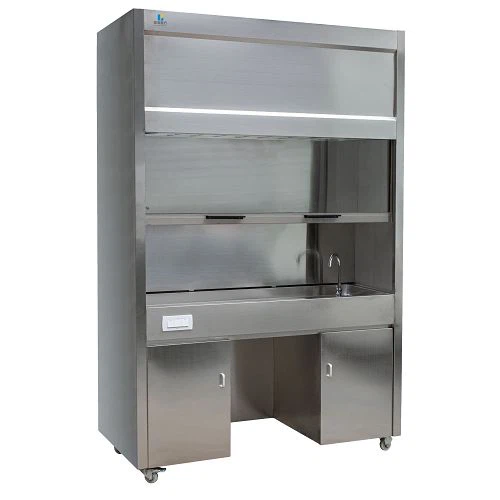

Another cause is the lack of proper cleaning and maintenance. Over time, residues from previous experiments can accumulate on the surfaces of the fume hood, including the workbench, sash, and exhaust ducts. These residues can contaminate subsequent experiments.
Airflow issues also play a significant role. If the airflow in the fume hood is not properly balanced or if there are disruptions in the airflow pattern, contaminants can be carried from one area of the fume hood to another, causing cross - contamination.
Selecting the Right Fume Hood
The first step in preventing cross - contamination is to select the appropriate fume hood for your specific needs. We offer a variety of fume hoods, such as Chemistry Fume Hood, Portable Fume Hood, and Lab Fume Hood.
Chemistry fume hoods are designed specifically for handling chemicals. They are equipped with features such as chemical - resistant liners and high - efficiency exhaust systems to ensure the safe handling of hazardous chemicals. Portable fume hoods, on the other hand, are ideal for situations where flexibility is required. They can be easily moved from one location to another, making them suitable for temporary or mobile laboratory setups. Lab fume hoods are more general - purpose and can be used for a wide range of laboratory applications.
When choosing a fume hood, consider factors such as the type of chemicals you will be using, the volume of work, and the available space in your laboratory. A well - selected fume hood can significantly reduce the risk of cross - contamination.
Proper Chemical Storage
Proper chemical storage is essential for preventing cross - contamination. In the fume hood, chemicals should be stored in a well - organized manner. Group chemicals according to their compatibility. For example, acids should be stored separately from bases, and oxidizing agents should be kept away from flammable substances.
Use labeled storage containers to clearly identify the contents. This not only helps in preventing accidental mixing but also makes it easier to locate specific chemicals when needed. Avoid overcrowding the fume hood with chemicals. Leave enough space between containers to prevent spills and ensure proper ventilation.
Regular Cleaning and Maintenance
Regular cleaning and maintenance of the fume hood are crucial for preventing cross - contamination. After each use, wipe down the workbench and other surfaces of the fume hood with a suitable cleaning agent. Pay special attention to areas where spills are likely to occur, such as the edges of the workbench and the sash.
The exhaust ducts of the fume hood should also be cleaned regularly to remove any accumulated residues. This helps to maintain proper airflow and prevent the spread of contaminants. In addition, check the filters of the fume hood regularly and replace them as needed. A clogged filter can reduce the efficiency of the exhaust system and increase the risk of cross - contamination.
Airflow Management
Proper airflow management is vital for preventing cross - contamination in a fume hood. The fume hood should be installed in a location where there are no obstructions to the airflow. Keep the sash at the recommended height to ensure a consistent and effective airflow pattern.
Avoid placing large objects near the front of the fume hood, as this can disrupt the airflow. If you need to use equipment inside the fume hood, make sure it is properly positioned to allow for unobstructed airflow. Regularly monitor the airflow velocity of the fume hood using an anemometer. If the airflow velocity is too low, it may indicate a problem with the exhaust system, and immediate action should be taken to correct it.
Personal Protective Equipment (PPE)
Personal protective equipment plays an important role in preventing cross - contamination. Laboratory personnel should wear appropriate PPE, such as gloves, lab coats, and safety goggles, when working in the fume hood. Gloves should be changed regularly, especially after handling different chemicals, to prevent the transfer of contaminants.
Lab coats should be clean and free of any chemical residues. They should be removed and washed regularly to maintain their effectiveness. Safety goggles protect the eyes from splashes and airborne contaminants. By wearing the right PPE, laboratory personnel can reduce the risk of cross - contamination and protect themselves from potential hazards.
Training and Education
Proper training and education of laboratory personnel are essential for preventing cross - contamination. All personnel who work in the fume hood should receive comprehensive training on its proper use, including chemical storage, cleaning procedures, and airflow management.
Training should also cover the importance of following safety protocols and the potential consequences of cross - contamination. Regular refresher courses should be provided to ensure that personnel stay up - to - date with the latest safety practices. By investing in training and education, you can create a safer laboratory environment and reduce the risk of cross - contamination.
Isolation and Segregation
In some cases, it may be necessary to isolate or segregate different types of experiments or chemicals within the fume hood. For example, if you are conducting experiments with highly reactive or toxic chemicals, you may want to use a separate fume hood or create a physical barrier within the fume hood to prevent cross - contamination.
This can be achieved by using partitions or dedicated work areas. By isolating and segregating different activities, you can minimize the risk of cross - contamination and ensure the safety of your laboratory operations.
Monitoring and Inspection
Regular monitoring and inspection of the fume hood are necessary to ensure its proper functioning and to detect any potential issues that could lead to cross - contamination. Inspect the fume hood for any signs of damage, such as cracks in the liner or leaks in the exhaust system.
Monitor the performance of the fume hood, including airflow velocity, pressure differentials, and filter efficiency. Keep records of these inspections and monitoring results to track the performance of the fume hood over time. If any problems are detected, take immediate action to address them.
Conclusion
Preventing cross - contamination in a fume hood is a multi - faceted process that requires careful planning, proper equipment selection, and strict adherence to safety protocols. As a fume hood supplier, we are committed to providing high - quality fume hoods and supporting our customers in creating a safe and contamination - free laboratory environment.
If you are interested in learning more about our fume hood products or need assistance in preventing cross - contamination in your laboratory, we invite you to contact us for a procurement discussion. Our team of experts is ready to help you find the best solutions for your specific needs.
References
- American National Standards Institute (ANSI). (2016). ANSI/AIHA Z9.5 - 2016, Laboratory Ventilation.
- Occupational Safety and Health Administration (OSHA). (2012). Laboratory Safety Guidance.
- National Fire Protection Association (NFPA). (2015). NFPA 45, Standard on Fire Protection for Laboratories Using Chemicals.