


Hey there, fellow lab enthusiasts! I'm a supplier of Chemical Fume Hoods, and I've seen firsthand how crucial it is to have these bad boys in the right spot in a lab. Today, I'm gonna share some tips on how to optimize the position of a chemical fume hood in a laboratory.
Why Position Matters
First off, let's talk about why the position of a chemical fume hood is such a big deal. A fume hood is designed to protect lab workers from harmful fumes, vapors, and dust. If it's not placed correctly, it won't work as effectively, and that can put people at risk.
Think about it like this: a fume hood is like a vacuum cleaner for your lab. It sucks in all the bad stuff and keeps it away from you. But if you place it in a spot where there's a lot of air movement or where it's blocked by other equipment, it won't be able to do its job properly.
Factors to Consider
Now that we know why position matters, let's talk about the factors you need to consider when choosing a spot for your fume hood.
Airflow
Airflow is one of the most important factors to consider. You want to place your fume hood in an area where there's good airflow, but not too much. If there's too much airflow, it can disrupt the fume hood's ability to capture and contain the fumes. On the other hand, if there's not enough airflow, the fumes won't be properly exhausted, and they can build up in the lab.
A good rule of thumb is to place your fume hood away from doors, windows, and other sources of air movement. You also want to make sure there's enough space around the fume hood for the air to circulate freely.
Proximity to Work Areas
Another important factor to consider is the proximity to work areas. You want to place your fume hood close to the areas where the hazardous materials are being used, but not so close that it becomes a safety hazard.
For example, if you're working with chemicals that produce a lot of fumes, you want to place the fume hood as close as possible to the workbench where the chemicals are being used. This will minimize the distance the fumes have to travel and reduce the risk of exposure.
Accessibility
Accessibility is also an important factor to consider. You want to make sure your fume hood is easily accessible to the lab workers who need to use it. This means placing it in an area where there's enough space for people to move around and operate the fume hood safely.
You also want to make sure the fume hood is easy to reach from the workbench. This will make it more convenient for the lab workers to use the fume hood and reduce the risk of them not using it at all.
Electrical and Plumbing Requirements
Finally, you need to consider the electrical and plumbing requirements of your fume hood. Most fume hoods require a dedicated electrical circuit and a water supply for the exhaust system. You want to make sure the spot you choose for your fume hood has access to these utilities.
Types of Fume Hoods and Their Placement
Now that we've talked about the factors to consider when choosing a spot for your fume hood, let's talk about the different types of fume hoods and their placement.
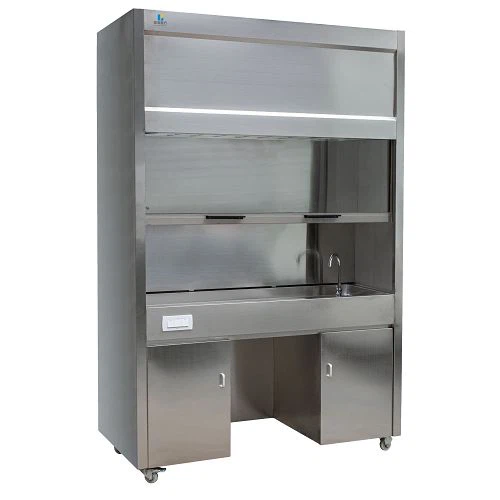
Lab Fume Hood
A Lab Fume Hood is the most common type of fume hood used in laboratories. It's designed to provide a safe and controlled environment for working with hazardous materials.
Lab fume hoods are typically placed against a wall or in a corner of the lab. This helps to minimize the amount of air movement around the fume hood and provides a stable base for the exhaust system.
Portable Fume Hood
A Portable Fume Hood is a smaller, more mobile version of a lab fume hood. It's designed to be easily moved from one location to another and can be used in a variety of settings.
Portable fume hoods are typically placed on a workbench or cart. They're ideal for use in small labs or for temporary work areas where a permanent fume hood isn't practical.
Chemistry Fume Hood
A Chemistry Fume Hood is a specialized type of fume hood designed for use in chemistry labs. It's typically larger and more powerful than a standard lab fume hood and is designed to handle the more hazardous chemicals used in chemistry experiments.
Chemistry fume hoods are typically placed in a dedicated chemistry lab or in an area of the lab where the most hazardous chemicals are being used. They're often connected to a central exhaust system to ensure proper ventilation.
Installation and Maintenance
Once you've chosen the perfect spot for your fume hood, it's important to have it installed by a professional. A professional installer will make sure the fume hood is properly installed and connected to the exhaust system. They'll also test the fume hood to make sure it's working properly.
In addition to proper installation, it's also important to maintain your fume hood regularly. This includes cleaning the fume hood, replacing the filters, and testing the airflow. Regular maintenance will help to ensure that your fume hood is working properly and providing the maximum level of protection for your lab workers.

Conclusion
Optimizing the position of a chemical fume hood in a laboratory is crucial for the safety and well-being of your lab workers. By considering the factors we've discussed in this blog post, you can choose the perfect spot for your fume hood and ensure that it's working properly.
If you're in the market for a chemical fume hood, I'd love to help you find the right one for your lab. Just reach out to me, and we can discuss your specific needs and requirements. I'm here to make sure you get the best fume hood for your money and that it's installed and maintained properly.
Let's work together to create a safe and healthy lab environment for everyone!
References
- American National Standards Institute (ANSI). (2019). ANSI/AIHA Z9.5-2019, Laboratory Ventilation.
- Occupational Safety and Health Administration (OSHA). (2012). Laboratory Safety Guide.
- National Fire Protection Association (NFPA). (2015). NFPA 45, Standard on Fire Protection for Laboratories Using Chemicals.