




Hey there! I'm a supplier of cryostats, and I often get asked a pretty interesting question: Can cryostats be used in high - altitude areas? Let's dig into this topic and find out.
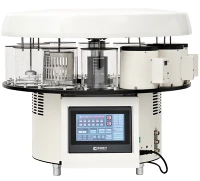
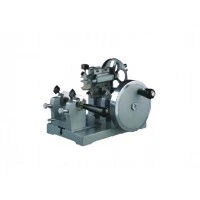
First off, what the heck is a cryostat? For those who aren't in the know, a cryostat is a device used to maintain low temperatures for various scientific and medical applications. It's super useful in fields like histology, where it helps to freeze tissue samples so they can be sliced thinly for examination under a microscope. We offer different types of cryostats, like the Cryostats Semi - Automatic, Cryotome, and Cryostat Microtome With Touch Screen. These cryostats are designed to provide precise temperature control and high - quality performance.
Now, let's talk about high - altitude areas. High - altitude regions have some unique environmental conditions. The air pressure is lower compared to sea - level areas. As you go up in altitude, the atmospheric pressure drops, and this can have a big impact on how equipment functions.
One of the main concerns when using a cryostat at high altitudes is the cooling system. Cryostats rely on refrigeration systems to maintain low temperatures. The performance of these refrigeration systems can be affected by the lower air pressure. In a normal situation at sea level, the refrigeration cycle works based on a certain pressure differential. When the air pressure is lower, the compressor in the cryostat may have to work harder to achieve the same level of cooling. This could potentially lead to increased energy consumption and more wear and tear on the compressor.
Another aspect to consider is the insulation. Cryostats are designed with insulation materials to prevent heat from entering the cold chamber. At high altitudes, the thinner air may not conduct heat as well as at lower altitudes, which sounds like it could be an advantage. However, the lower air pressure can also affect the performance of some insulation materials. Some insulation materials rely on trapped air pockets to provide thermal resistance. With lower air pressure, these air pockets may expand or contract in unexpected ways, reducing the effectiveness of the insulation.
The electrical components in a cryostat can also be affected. The lower air pressure can cause issues with electrical arcing. Electrical arcing is when an electric current jumps through the air between two conductors. In high - altitude areas, the thinner air makes it easier for arcing to occur, which can damage the electrical components in the cryostat and pose a safety risk.
But hey, it's not all doom and gloom. There are ways to make cryostats work well in high - altitude areas. Manufacturers can design cryostats with compressors that are more suitable for low - pressure environments. These compressors can be engineered to operate efficiently even when the air pressure is low. Additionally, better insulation materials can be used. Some advanced insulation materials are less affected by changes in air pressure and can maintain their thermal resistance even in high - altitude conditions.


For the electrical components, special coatings and designs can be used to prevent arcing. These protective measures can ensure the safety and reliability of the cryostat's electrical system.
We've had some customers in high - altitude areas who've successfully used our cryostats. One customer in a mountainous region was using our Cryostat Microtome With Touch Screen for histological research. At first, they were a bit worried about how the cryostat would perform. But after some adjustments and with the help of our technical support team, they were able to get the cryostat up and running smoothly. They reported that the cryostat was able to maintain the required low temperatures and that the microtome functioned well for slicing tissue samples.
So, in conclusion, while there are challenges to using cryostats in high - altitude areas, it is definitely possible. With the right design, engineering, and support, cryostats can be used effectively in these unique environments.
If you're in a high - altitude area and are thinking about purchasing a cryostat, don't hesitate to reach out. We have a team of experts who can help you choose the right cryostat for your needs and provide you with all the support you need to ensure its proper operation. Whether you're interested in our Cryostats Semi - Automatic, Cryotome, or Cryostat Microtome With Touch Screen, we're here to assist you. Contact us to start a conversation about your cryostat requirements and let's find the best solution together.
References
- "Handbook of Refrigeration Systems and Applications"
- "High - Altitude Effects on Electrical Equipment"
- "Thermal Insulation Materials: Properties and Applications"