


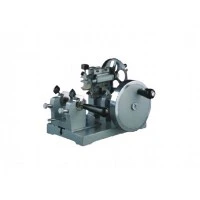
As a supplier of Automated Slide Stainer, I often get asked whether our machines can handle different types of slides. This is a crucial question for laboratories and medical facilities that deal with a wide variety of specimens. In this blog post, I'll delve into the capabilities of our automated slide stainers and explain how they can accommodate different slide types.


Understanding Different Types of Slides
Before we discuss how our Automated Slide Stainer can handle various slides, it's important to understand the different types of slides commonly used in laboratories.
- Glass Slides: These are the most traditional and widely used type of slides. They are made of high - quality glass, which provides a clear and stable surface for specimen mounting. Glass slides come in different thicknesses and sizes, with the standard size being 75mm x 25mm. They can be used for a variety of staining techniques, including hematoxylin and eosin (H&E) staining, immunohistochemistry (IHC), and in - situ hybridization (ISH).
- Plastic Slides: Plastic slides are becoming increasingly popular due to their lower cost and reduced risk of breakage compared to glass slides. They are available in different polymers, such as polystyrene and polycarbonate. Plastic slides are suitable for some staining procedures, especially those that do not require high - temperature processing. However, they may not be compatible with all staining reagents, and their optical properties may be slightly different from glass slides.
- Frosted - End Slides: Both glass and plastic slides can have a frosted end. The frosted area is used for writing specimen information, such as patient name, sample number, and date. Frosted - end slides are essential for proper specimen identification and tracking in a laboratory setting.
- Microarray Slides: These slides are used for high - throughput analysis of biological samples, such as DNA, RNA, or proteins. Microarray slides have a large number of small spots, each containing a specific probe or sample. Staining microarray slides requires precise control of the staining process to ensure accurate and reproducible results.
Capabilities of Our Automated Slide Stainer
Our Automated Slide Stainer is designed with advanced technology to handle different types of slides effectively.
1. Slide Compatibility
The stainer has a flexible slide holder design that can accommodate various slide sizes and shapes. Whether you are using standard glass slides, plastic slides, or frosted - end slides, our machine can securely hold them in place during the staining process. The adjustable slide holders ensure that there is no movement or misalignment of the slides, which is crucial for obtaining consistent staining results.
2. Staining Flexibility
Our automated slide stainer is capable of performing a wide range of staining techniques, making it suitable for different slide types. For example, it can handle H&E staining, which is the most common staining method used in histology. The machine can accurately dispense the appropriate amounts of hematoxylin and eosin dyes, and control the staining time and temperature to achieve optimal results on both glass and plastic slides.
In addition, our stainer is also compatible with IHC and ISH staining. These are more complex staining techniques that require precise control of the staining conditions, including the use of specific antibodies and probes. Our machine can be programmed to follow the exact staining protocols for these techniques, ensuring reliable and reproducible results on microarray slides as well as standard slides.
3. Chemical Resistance
The materials used in the construction of our Automated Slide Stainer are highly resistant to a variety of staining chemicals. This is important because different slide types may require different staining reagents, some of which can be corrosive. The chemical - resistant components of our machine ensure its durability and reliability, even when used with aggressive staining chemicals.
4. Temperature Control
Some staining procedures require specific temperature conditions. Our automated slide stainer is equipped with a precise temperature control system. This system can maintain the desired temperature throughout the staining process, whether it is a low - temperature incubation for certain plastic slides or a high - temperature step for some glass slide staining protocols. The accurate temperature control helps to optimize the staining results and ensures the integrity of the specimens on different slide types.
Advantages of Using Our Automated Slide Stainer for Different Slide Types
1. Consistency
One of the main advantages of using our Automated Slide Stainer is the consistency of staining results. Manual staining can be prone to human error, such as inconsistent dye application or inaccurate timing. Our automated machine follows a pre - programmed protocol for each slide, ensuring that every slide is stained in the same way, regardless of its type. This consistency is crucial for accurate diagnosis and research.
2. Efficiency
Automated staining is much faster than manual staining. Our machine can process multiple slides simultaneously, reducing the overall staining time. This is especially beneficial for laboratories that handle a large volume of specimens. Whether you are staining a batch of glass slides for routine histological examination or a set of microarray slides for high - throughput research, our automated slide stainer can significantly increase your laboratory's efficiency.
3. Cost - Effectiveness
In the long run, using our automated slide stainer can be cost - effective. Although the initial investment may be higher than manual staining methods, the reduced labor costs, lower reagent waste, and increased throughput make it a more economical choice. Additionally, the consistent staining results can reduce the need for re - staining, which further saves time and resources.
Conclusion
In conclusion, our Automated Slide Stainer is fully capable of handling different types of slides. Its flexibility in slide compatibility, staining techniques, chemical resistance, and temperature control make it a versatile tool for laboratories and medical facilities. The advantages of consistency, efficiency, and cost - effectiveness make it an ideal choice for any institution that deals with a wide variety of specimens.
If you are interested in learning more about our Automated Slide Stainer or Automatic Slide Stainer and how it can meet your specific needs, we encourage you to contact us for a detailed discussion. Our team of experts is always ready to provide you with the best solutions for your laboratory staining requirements. You can also visit our factory page Automated Stainer to get a better understanding of our manufacturing capabilities. Let's start the conversation about improving your laboratory's staining workflow today!
References
- Bancroft, J. D., & Gamble, M. (2008). Theory and Practice of Histological Techniques. Churchill Livingstone.
- Kiernan, J. A. (2008). Histological and Histochemical Methods: Theory and Practice. Oxford University Press.
- Mikel, U. A., & Barr, F. E. (2013). Manual of Histologic Staining Methods of the Armed Forces Institute of Pathology. McGraw - Hill Education.