




Hey there! As a coverslipper supplier, I often get asked if there are coverslippers for different types of specimens. The short answer is yes! In this blog post, I'll dive into the details of how different specimens require specific coverslippers and why it matters.
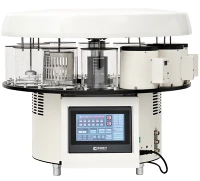
Let's start by understanding what a coverslipper is. A coverslipper is a device used to place a coverslip on a microscope slide with a specimen. It ensures that the coverslip is placed evenly and without air bubbles, which is crucial for getting clear and accurate microscopic images. There are various types of coverslippers available in the market, including Automated Glass Coverslipper and Glass Coverslipper.
Coverslippers for Biological Specimens
Biological specimens, such as cells, tissues, and microorganisms, are some of the most common types of specimens observed under a microscope. These specimens are often delicate and require special handling. For biological specimens, glass coverslippers are typically the go - to choice. Glass has several advantages when it comes to observing biological samples.
First of all, glass is optically clear, which means it allows light to pass through easily without distorting the image. This is essential for getting high - resolution images of biological specimens. The smooth surface of glass also helps in minimizing the interference with the specimen, allowing for a more accurate view of the cells and tissues.
Moreover, glass is chemically inert, so it won't react with the biological specimens or the mounting media used to preserve them. This is important because any chemical reaction could damage the specimen and affect the results of the observation. For example, when observing a tissue sample stained with a particular dye, a glass coverslip ensures that the dye remains stable and the colors are accurately represented.
In addition to traditional glass coverslippers, automated glass coverslippers are becoming increasingly popular in laboratories. These automated devices offer a more precise and consistent way of placing the coverslip on the slide. They can handle a large number of slides quickly, which is beneficial for high - throughput research. For instance, in a cancer research lab where hundreds of tissue samples need to be analyzed, an automated glass coverslipper can save a significant amount of time and effort.
Coverslippers for Mineral Specimens
Mineral specimens are quite different from biological specimens. They are often hard and may have irregular surfaces. When it comes to observing minerals under a microscope, the requirements for coverslippers are also different.
For mineral specimens, a coverslipper that can withstand the hardness of the minerals is needed. Glass coverslippers can still be used, but sometimes, they may get scratched if the mineral is very hard. In such cases, a more durable type of coverslipper might be considered. Some suppliers offer coverslippers made of special types of glass or even plastic that are more resistant to scratches.
The thickness of the coverslipper also matters when observing minerals. Since minerals can have different refractive indices, the thickness of the coverslip can affect the way light passes through the specimen and the coverslip. A coverslipper with the appropriate thickness can help in getting a clear view of the internal structure of the mineral, such as the crystal lattice or the presence of inclusions.
Another aspect to consider is the way the coverslipper is attached to the slide. Mineral specimens may require a different type of mounting media compared to biological specimens. For example, some minerals may be mounted in a resin - based medium, and the coverslipper needs to be compatible with this type of medium. A good coverslipper supplier will be able to provide advice on the best type of coverslipper and mounting medium for different mineral specimens.
Coverslippers for Electronic Specimens
In the field of electronics, specimens such as integrated circuits, printed circuit boards, and semiconductor materials are often observed under a microscope. These specimens have their own unique characteristics.
Electronic specimens are usually very small and may have fine details that need to be observed. The coverslipper used for these specimens needs to be extremely thin and have a high level of flatness. A thin coverslip allows for a closer focus on the specimen, which is important for seeing the tiny components and connections in electronic devices.
The cleanliness of the coverslipper is also crucial when observing electronic specimens. Even a small particle of dust on the coverslip can interfere with the observation and make it difficult to see the details of the specimen. Therefore, coverslippers for electronic specimens are often manufactured in a clean - room environment to ensure a high level of purity.
Automated coverslippers can be very useful in the electronics industry as well. They can place the coverslip with high precision, which is essential for getting accurate images of the delicate electronic components. For example, in a semiconductor manufacturing plant, an automated glass coverslipper can be used to prepare the specimens for quality control inspections, ensuring that the integrated circuits meet the required standards.
Coverslippers for Microfluidic Specimens
Microfluidic specimens involve the study of fluids flowing through tiny channels and chambers. These specimens are commonly used in fields such as biotechnology, chemistry, and environmental science.
The coverslippers for microfluidic specimens need to be compatible with the microfluidic devices. They should be able to seal the channels properly to prevent the leakage of fluids. A good seal is important because it ensures that the fluid flow is controlled and the reactions taking place inside the microfluidic channels can be accurately observed.
The material of the coverslipper for microfluidic specimens also needs to be selected carefully. Some microfluidic devices use polymers, and the coverslipper should be made of a material that can bond well with the polymer. For example, a plastic coverslipper may be a better choice in some cases as it can be more flexible and easier to bond with the microfluidic channels.


In addition, the transparency of the coverslipper is important for observing the fluid flow and any chemical reactions occurring inside the microfluidic device. Just like with other types of specimens, optical clarity is essential for getting clear images of the microfluidic processes.
Why Choosing the Right Coverslipper Matters
Choosing the right coverslipper for a particular type of specimen is not just a matter of preference; it can have a significant impact on the quality of the microscopic observation. Using an inappropriate coverslipper can lead to a variety of problems.
If the coverslipper is not optically clear, the image will be blurry, and it will be difficult to distinguish the details of the specimen. Air bubbles trapped under the coverslip can also distort the image and make it hard to analyze the specimen accurately. Moreover, if the coverslipper is not chemically compatible with the specimen or the mounting media, it can damage the specimen and render the observation useless.
In research and industrial applications, accurate microscopic observations are crucial for making informed decisions. For example, in medical research, a clear view of the cells can help in diagnosing diseases and developing new treatments. In the electronics industry, accurate imaging of the components can ensure the quality and reliability of the products.
As a coverslipper supplier, I understand the importance of providing the right coverslippers for different types of specimens. We offer a wide range of coverslippers, including both glass and plastic options, and our automated coverslippers are designed to meet the high - precision requirements of modern laboratories.
If you're in the market for coverslippers for your specific specimens, whether they are biological, mineral, electronic, or microfluidic, I'd love to have a chat with you. We can discuss your needs in detail and help you choose the best coverslipper solution for your application. Contact us to start a conversation about your coverslipper requirements and let's work together to ensure the success of your microscopic observations.
References
- Principles of Microscopy, various editions.
- Handbook of Laboratory Techniques for Biological and Medical Research.
- Journal articles on microscopy in the fields of electronics, geology, and biotechnology.