


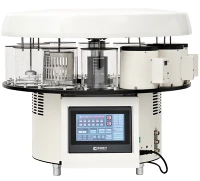



Cutting metal samples with a microtome is a delicate and specialized process that requires a combination of technical know - how, appropriate equipment, and careful sample preparation. As a microtome supplier, I have witnessed firsthand the challenges and nuances involved in this task. In this blog, I will discuss the special techniques needed to cut metal samples effectively using a microtome.
Understanding the Basics of Microtomes
Before delving into the techniques for cutting metal samples, it's essential to understand the different types of microtomes available. There are various models designed for specific applications, such as the Fully Automated Rotary Microtome and the Freezing Microtome. Each type has its own set of features and advantages, which can impact the cutting process.
The fully automated rotary microtome is a popular choice for cutting thin sections of various materials, including metals. It offers precise control over the cutting speed and thickness, allowing for consistent and high - quality results. On the other hand, the freezing microtome is often used when the sample needs to be kept at low temperatures during the cutting process, which can be beneficial for certain types of metals.
Sample Preparation
One of the most crucial steps in cutting metal samples with a microtome is proper sample preparation. This involves several key aspects:
Embedding
Metals are typically hard and brittle, so they need to be embedded in a suitable medium to provide support during cutting. Epoxy resin is a commonly used embedding material for metal samples. It has good mechanical properties and can be easily cured to form a solid block around the sample.
To embed the metal sample, it is first placed in a mold, and then the epoxy resin is poured over it. The resin should be degassed to remove any air bubbles that could affect the cutting quality. After the resin has cured, the block can be trimmed to the appropriate size and shape for cutting.
Mounting
Once the sample is embedded, it needs to be mounted on the microtome. This is usually done using a mounting device that secures the block firmly in place. The mounting should be precise to ensure that the cutting edge of the blade is perpendicular to the surface of the sample. Any misalignment can result in uneven cuts or damage to the sample.
Choosing the Right Blade
Selecting the appropriate blade is essential for cutting metal samples with a microtome. There are different types of blades available, each with its own characteristics and suitability for specific metals.
Diamond Blades
Diamond blades are often the preferred choice for cutting hard metals. They are extremely sharp and can withstand the high forces required to cut through dense materials. Diamond blades come in various shapes and sizes, and the selection depends on the type of metal and the desired cutting thickness.
Tungsten Carbide Blades
Tungsten carbide blades are also commonly used for cutting metals. They are more affordable than diamond blades and can provide good cutting performance for many types of metals. However, they may not be as durable as diamond blades when cutting extremely hard metals.
Cutting Techniques
Once the sample is prepared and the blade is selected, it's time to start cutting. Here are some important techniques to keep in mind:
Cutting Speed
The cutting speed is a critical factor in achieving high - quality cuts. For metal samples, a relatively slow cutting speed is usually recommended to prevent overheating and damage to the blade and the sample. The exact cutting speed will depend on the type of metal, the blade used, and the desired cutting thickness.


Cutting Thickness
Controlling the cutting thickness is essential for obtaining thin, uniform sections of the metal sample. Most microtomes allow for precise adjustment of the cutting thickness. It's important to start with a relatively thick cut and gradually reduce the thickness as the cutting progresses to avoid excessive stress on the blade and the sample.
Lubrication
Lubrication is often necessary when cutting metal samples to reduce friction and heat generation. A suitable lubricant, such as mineral oil or water - based coolant, can be applied to the cutting area. This helps to extend the life of the blade and improve the cutting quality.
Troubleshooting Common Issues
Even with the best techniques and equipment, problems can still occur during the cutting process. Here are some common issues and how to address them:
Chipping or Cracking
Chipping or cracking of the metal sample can occur if the cutting speed is too high, the blade is dull, or the sample is not properly embedded. To fix this issue, reduce the cutting speed, replace the blade if necessary, and ensure that the sample is well - embedded.
Uneven Cuts
Uneven cuts can be caused by misalignment of the sample or the blade, or by variations in the hardness of the metal. Check the alignment of the sample and the blade, and make sure that the metal is homogeneous. If the metal has different hardness regions, it may be necessary to adjust the cutting parameters accordingly.
Quality Control
After cutting the metal samples, it's important to perform quality control checks to ensure that the sections meet the required standards. This can involve visual inspection under a microscope to check for any defects, such as cracks, chips, or uneven thickness.
If the sections do not meet the quality requirements, the cutting process may need to be repeated with adjustments to the sample preparation, blade selection, or cutting parameters.
Conclusion
Cutting metal samples with a microtome is a complex process that requires a combination of specialized techniques, appropriate equipment, and careful attention to detail. As a microtome supplier, we offer a range of high - quality microtomes, including the Fully Automated Rotary Microtome, Freezing Microtome, and Microtome Machine, to meet the diverse needs of our customers.
If you are involved in the cutting of metal samples and are looking for reliable microtome solutions, we encourage you to contact us for a detailed discussion. Our team of experts can provide you with the guidance and support you need to achieve the best results in your cutting applications.
References
- Echlin, P. (1992). Electron Microscopy and Analysis. Butterworth - Heinemann.
- Hayat, M. A. (2000). Principles and Techniques of Electron Microscopy: Biological Applications. Cambridge University Press.
- Rieder, C. L., & Cassels, G. O. (1999). High - Pressure Freezing and Freeze - Substitution. Methods in Cell Biology, 61, 3 - 23.