




Dehydration plays a pivotal role in the tissue processing workflow, a critical step that significantly impacts the quality of subsequent histological examinations. As a leading supplier of tissue processors, we understand the intricacies of this process and its importance in delivering accurate and reliable results. In this blog, we will delve into the role of dehydration in a tissue processor, exploring its significance, the mechanisms involved, and the impact it has on the overall histological analysis.
The Significance of Dehydration in Tissue Processing
Tissue processing is a multi - step procedure that prepares biological specimens for histological examination. It involves fixing, dehydrating, clearing, and infiltrating the tissue with paraffin wax. Dehydration is a crucial intermediate step that bridges the gap between fixation and subsequent processes.
The primary purpose of dehydration is to remove water from the tissue. Biological tissues are composed mostly of water, which is incompatible with the embedding media (such as paraffin wax) used in histology. If water is not removed, it can cause artifacts during embedding, such as poor penetration of the wax, resulting in tissue distortion and poor sectioning quality.
Moreover, dehydration is essential for enhancing the transparency of the tissue. Once the water is replaced by dehydrating agents, the tissue becomes more transparent, allowing for better visualization during microscopic examination. This is particularly important for detecting and analyzing cellular and tissue structures accurately.
Mechanisms of Dehydration in a Tissue Processor
In a tissue processor, dehydration is typically achieved through a series of graded alcohol solutions. The tissue is gradually transferred from lower - concentration alcohol solutions to higher - concentration ones. This step - by - step approach is crucial to prevent tissue damage.
When the tissue is first placed in a low - concentration alcohol solution, the alcohol molecules start to diffuse into the tissue, while water molecules diffuse out. As the tissue moves through the series of alcohol solutions with increasing concentrations, more and more water is removed.
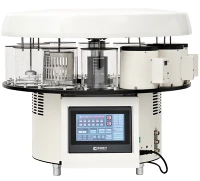
Modern tissue processors, such as the Automatic Tissue Processor in Histopathology, are designed to automate this process. They can precisely control the time and temperature of each dehydration step, ensuring consistent and reproducible results. The automation also reduces the risk of human error, which is especially important in high - volume laboratories.
Impact of Dehydration on Histological Analysis
The quality of dehydration directly affects the outcome of histological analysis. Properly dehydrated tissues are easier to embed in paraffin wax. The wax can penetrate the tissue evenly, resulting in well - preserved tissue structures. When sectioned, these tissues produce thin, uniform slices that can be easily mounted on slides for staining and microscopic examination.
On the other hand, inadequate dehydration can lead to a range of problems. If there is residual water in the tissue, the paraffin wax may not penetrate fully, causing the tissue to crumble or break during sectioning. This can make it difficult to obtain clear and interpretable histological images, leading to inaccurate diagnoses.
Over - dehydration can also be a concern. Excessive exposure to high - concentration alcohol solutions can cause tissue shrinkage and hardening. This can distort the tissue architecture, making it challenging to identify normal and abnormal cellular structures.
Our Tissue Processors and Dehydration
As a tissue processor supplier, we offer a range of products that are optimized for efficient and effective dehydration. The Kuohai Medical KH - TD Spin Tissue Processor (vacuum Option) is one such example. This tissue processor uses a spin technology that enhances the penetration of dehydrating agents into the tissue. The vacuum option further accelerates the dehydration process by reducing the boiling point of the alcohol solutions, allowing for faster water removal.

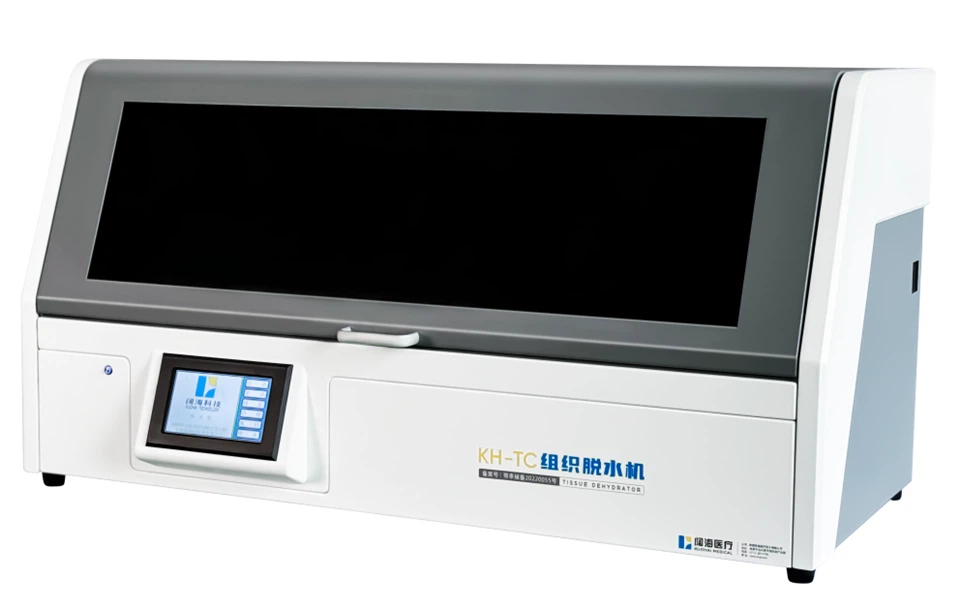
Our Benchtop Tissue Processor for hist;ology and pathology lab is another popular choice. It is designed for smaller laboratories or research facilities. Despite its compact size, it offers precise control over the dehydration process, ensuring high - quality results.
Conclusion
Dehydration is an indispensable step in tissue processing, with far - reaching implications for histological analysis. As a tissue processor supplier, we are committed to providing products that optimize the dehydration process. Our tissue processors are designed to meet the diverse needs of laboratories, from high - volume clinical settings to smaller research facilities.
If you are looking to upgrade your tissue processing capabilities or are in the market for a new tissue processor, we invite you to contact us for a detailed discussion. Our team of experts can help you select the most suitable product for your specific requirements. We are dedicated to providing not only high - quality tissue processors but also comprehensive support to ensure that you achieve the best possible results in your histological examinations.
References
- Bancroft, J. D., & Gamble, M. (2008). Theory and Practice of Histological Techniques. Churchill Livingstone.
- Kiernan, J. A. (2008). Histological and Histochemical Methods: Theory and Practice. Oxford University Press.