




Is a Paraffin Trimmer easy to operate?
As a supplier of paraffin trimmers, I've had numerous conversations with customers regarding the ease of operation of these essential laboratory tools. In this blog, I'll delve into the intricacies of paraffin trimmers, exploring their user - friendliness and how they fit into the broader laboratory workflow.
Understanding the Paraffin Trimmer
Paraffin trimmers are indispensable in histology laboratories. Their primary function is to precisely trim paraffin - embedded tissue blocks to expose the tissue sample for subsequent sectioning. This step is crucial as it directly impacts the quality of the tissue sections obtained, which are then used for microscopic examination and diagnosis.


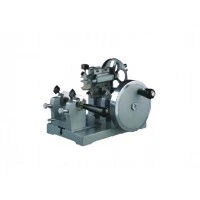
The paraffin trimmer typically consists of a cutting mechanism, a block holder, and a control system. The cutting mechanism can be either manual or motor - driven. Manual trimmers rely on the operator's physical force to move the blade, while motor - driven trimmers use an electric motor to power the cutting action.
Ease of Setup
One of the key aspects of ease of operation is the setup process. Our paraffin trimmers are designed with simplicity in mind. When a new paraffin trimmer arrives at the laboratory, the first step is unpacking. The packaging is carefully designed to protect the trimmer during transit, and all necessary components are clearly labeled.
The block holder can be easily adjusted to accommodate different sizes of paraffin blocks. Most of our trimmers come with a quick - release mechanism for the block holder, allowing for rapid installation and removal of the paraffin block. The blade installation is also straightforward. The blade is inserted into the blade holder, and a locking mechanism secures it in place. The blade angle can be adjusted according to the specific requirements of the trimming task, and this adjustment is usually done using a simple knob or lever.
User - Friendly Controls
Whether it's a manual or motor - driven paraffin trimmer, the controls are designed to be intuitive. In manual trimmers, the cutting force and speed are controlled by the operator's hand movements. The handle is ergonomically designed to reduce fatigue during extended use. The operator can easily control the depth of the cut by adjusting the position of the block holder relative to the blade.
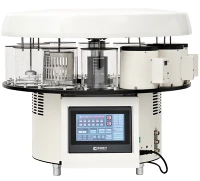
For motor - driven trimmers, the control panel is typically located within easy reach of the operator. The speed of the cutting blade can be adjusted using a digital display or a simple dial. Some of our advanced models even allow for programmable cutting sequences. For example, the operator can set the trimmer to make a series of cuts at specific depths and intervals, which is particularly useful for trimming large numbers of similar paraffin blocks.
Safety Features
Safety is always a top priority in laboratory equipment. Our paraffin trimmers are equipped with several safety features that also contribute to the ease of operation. The blade guard is designed to prevent accidental contact with the sharp blade. It can be easily removed for blade replacement and cleaning, but it automatically locks into place during normal operation.
There are also emergency stop buttons on the control panel. In case of any unexpected situation, the operator can quickly press the emergency stop button to halt the cutting process. The trimmer also has overload protection, which prevents damage to the motor in case of excessive force or a jammed blade.
Integration with Other Laboratory Equipment
Paraffin trimmers do not operate in isolation. They are part of a larger laboratory workflow that includes other equipment such as Slide Storage Cabinet, Slide Drying Cabinet, and Paraffin Storage Cabinet. Our paraffin trimmers are designed to be compatible with these other pieces of equipment.
After trimming, the paraffin block can be easily transferred to a microtome for sectioning. The trimmed block fits neatly into the microtome's block holder, ensuring a seamless transition between the trimming and sectioning processes. The trimmed paraffin shavings can be collected in a waste container, which can be easily removed and emptied.
Training and Support
We understand that even with a user - friendly design, new users may need some training. That's why we offer comprehensive training programs for our customers. Our technical support team can provide on - site training or remote training via video conferencing. We also provide detailed user manuals and online resources, including video tutorials, to help users get up to speed quickly.
Real - World User Experiences
Many of our customers have shared their positive experiences with our paraffin trimmers. They appreciate the ease of setup and the intuitive controls. One customer from a small research laboratory mentioned that the paraffin trimmer was so easy to operate that their new laboratory technician was able to start trimming paraffin blocks within a few hours of training.
Another customer from a large hospital laboratory noted that the programmable features of our motor - driven trimmer significantly increased their productivity. They were able to trim a large number of paraffin blocks with consistent quality, which was crucial for their high - volume diagnostic work.
Conclusion
In conclusion, paraffin trimmers are indeed easy to operate. From the initial setup to the day - to - day use, every aspect of these devices is designed with the user in mind. The user - friendly controls, safety features, and compatibility with other laboratory equipment make them an ideal choice for histology laboratories of all sizes.
If you're in the market for a paraffin trimmer, I encourage you to reach out to us. We'd be more than happy to discuss your specific requirements and help you choose the right trimmer for your laboratory. Whether you're a small research facility or a large diagnostic center, our paraffin trimmers can provide the performance and ease of operation you need. Contact us today to start the procurement process and take your laboratory's histology work to the next level.
References
- Histology Laboratory Manual, 3rd Edition
- Journal of Laboratory Equipment Technology, Vol. 15, Issue 2
- Best Practices in Histology Workflow Management