


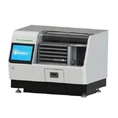

As a supplier of coverslippers, I often get asked about the cost of these essential laboratory tools. The price of a coverslipper can vary significantly depending on several factors, including the type, brand, quality, and quantity purchased. In this blog post, I'll delve into the details of coverslipper pricing to help you understand what influences the cost and make an informed decision for your laboratory needs.


Types of Coverslippers and Their Price Ranges
Glass Coverslippers
Glass coverslippers are the traditional choice for microscopy and are widely used in various scientific fields. They offer excellent optical clarity, which is crucial for high - resolution imaging. The cost of Glass Coverslipper can range from a few cents to several dollars per piece, depending on their specifications.
- Standard Glass Coverslippers: These are the most commonly used type. They are typically made from soda - lime glass and are available in various sizes, such as 18x18 mm, 22x22 mm, and 24x50 mm. Standard glass coverslippers are relatively inexpensive, usually costing between $0.05 and $0.20 per piece when purchased in bulk (100 - 1000 pieces). The lower cost makes them a great option for routine laboratory work where large quantities are needed.
- High - Quality Glass Coverslippers: For more demanding applications like fluorescence microscopy or electron microscopy, high - quality glass coverslippers are required. These are often made from borosilicate glass, which has better chemical resistance and thermal stability. They also have a more precise thickness and surface flatness, ensuring accurate imaging. High - quality glass coverslippers can cost anywhere from $0.50 to $2 per piece, especially when they are specially coated to reduce autofluorescence or enhance adhesion.
Automated Glass Coverslippers
Automated coverslippers are designed to streamline the coverslipping process in high - throughput laboratories. They are equipped with advanced features such as precise dispensing, automated alignment, and the ability to handle multiple slides simultaneously. The cost of an Automated Glass Coverslipper is much higher compared to manual glass coverslippers due to their complex technology and functionality.
- Entry - Level Automated Coverslippers: These models offer basic automation features and are suitable for small - to medium - sized laboratories. They can cost between $5,000 and $10,000. They usually have a limited capacity and may require some manual intervention, but they still provide significant time savings compared to manual coverslipping.
- High - End Automated Coverslippers: Designed for large - scale research facilities and industrial applications, high - end automated coverslippers come with advanced software, high - speed operation, and the ability to handle a wide range of slide sizes and coverslip types. These machines can cost upwards of $20,000, with some of the most sophisticated models reaching $50,000 or more.
Factors Affecting the Cost of Coverslippers
Quality and Purity
The quality of the material used in the coverslipper has a direct impact on its price. For glass coverslippers, high - purity glass with low levels of impurities and a uniform thickness is more expensive to produce. Such coverslippers are less likely to cause artifacts in the microscope image, making them ideal for critical research applications.
Manufacturing Process
The manufacturing process can also influence the cost. Coverslippers that are produced using more precise and automated manufacturing techniques tend to be more expensive. For example, automated manufacturing can ensure consistent quality and size, which is important for high - throughput applications. However, it requires significant investment in equipment and technology, which is reflected in the final price of the product.
Quantity of Purchase
As with most products, the quantity of coverslippers you purchase affects the unit price. Buying in bulk typically results in a lower cost per piece. For example, a laboratory that buys 10,000 standard glass coverslippers at once will likely pay a lower price per cover compared to a laboratory that only buys 100.
Brand Reputation
Well - established brands with a reputation for high - quality products often charge a premium for their coverslippers. These brands have invested heavily in research and development, quality control, and customer support, which justifies the higher price. However, it's important to note that there are also many reliable and cost - effective alternatives available from lesser - known brands.
Cost - Benefit Analysis
When considering the cost of a coverslipper, it's important to conduct a cost - benefit analysis. While it may be tempting to choose the cheapest option, it's essential to consider the long - term implications for your research.
- Accuracy and Reliability: High - quality coverslippers can improve the accuracy and reliability of your experimental results. For example, in fluorescence microscopy, a low - quality coverslipper with high autofluorescence can interfere with the detection of the fluorescent signal, leading to inaccurate data. Investing in a higher - quality coverslipper may save you time and resources in the long run by reducing the need for repeated experiments.
- Throughput: In high - throughput laboratories, the use of automated coverslippers can significantly increase productivity. Although the initial cost of an automated coverslipper is high, the time savings and increased efficiency can offset the cost over time. For example, an automated coverslipper can cover hundreds of slides in a fraction of the time it would take to cover them manually.
Making the Right Choice
To determine the most suitable coverslipper for your needs, you should consider the following steps:
- Assess Your Requirements: Consider the type of microscopy you will be performing, the volume of samples you need to process, and the level of accuracy required. This will help you determine whether you need a standard glass coverslipper, a high - quality glass coverslipper, or an automated coverslipper.
- Compare Prices: Obtain quotes from multiple suppliers to compare the prices of different coverslippers. Make sure to consider the quality, quantity discounts, and additional services offered by each supplier.
- Read Reviews: Look for reviews and testimonials from other laboratory professionals who have used the coverslippers you are considering. This can provide valuable insights into the performance and reliability of the products.
Contact for Purchase and Discussion
If you are interested in purchasing coverslippers for your laboratory, I encourage you to reach out to us for more information. We offer a wide range of coverslippers, including both glass and automated options, at competitive prices. Our team of experts can help you select the most suitable coverslipper for your specific needs and provide you with detailed pricing information. Whether you are a small research laboratory or a large industrial facility, we are committed to providing you with high - quality products and excellent customer service.
References
- Murphy, D. B. (2001). Fundamentals of light microscopy and electronic imaging. Wiley - Liss.
- Pawley, J. B. (2006). Handbook of biological confocal microscopy. Springer.